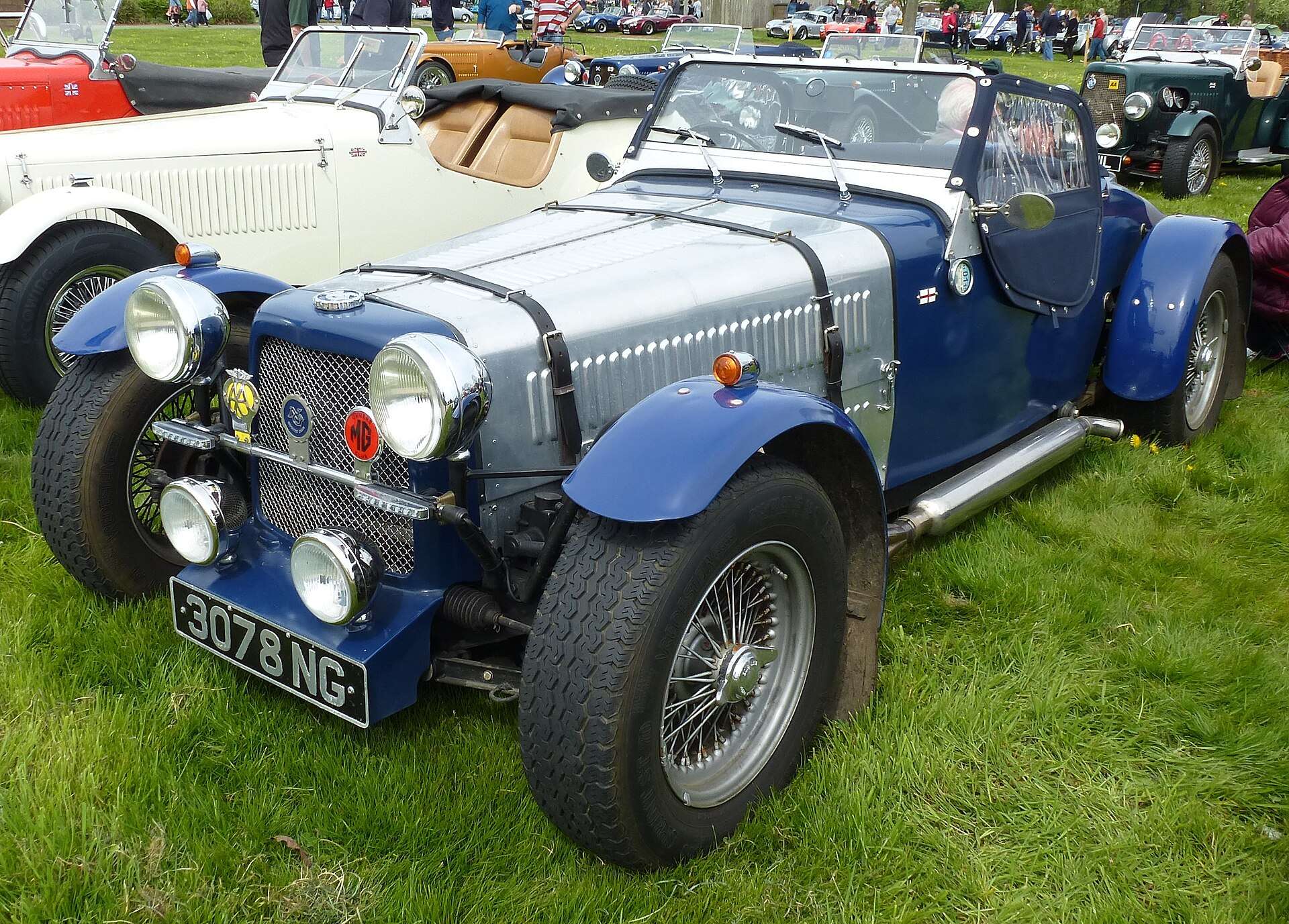
The NG TC combines a long bonnet, cycle wings and a distinctive boat-tail rear with a more recent mechanical foundation. It is an individual interpretation of traditional sports-car styling, and its appeal lies as much in the proportions and driving atmosphere as in outright performance.
For a buyer, the important distinction is between admiring the shape and understanding the car underneath. Four-cylinder and V8 installations, different build histories and later modifications can produce substantially different ownership experiences.
What is the NG TC?
The NG Owners Club identifies the TC as a two-seat, cycle-wing model with a boat-tail body. Its history records the TC appearing in V8 form in 1981, following Nick Green’s earlier TA. The marque’s original mechanical foundation was the MGB, but surviving cars need to be assessed individually.
The NG name should not be confused with MG’s own TC. Nor should the NG TC be treated as interchangeable with the flowing-wing TF or other NG variants. Identify the actual model and mechanical specification before comparing adverts or ordering body parts.
Begin with the build file
Ask for the kit invoice, donor details and photographs of the car during assembly. Record the engine, gearbox, axle, suspension and brakes. If the car has been rebuilt, distinguish the original specification from what is fitted now.
Owners’ club information and original parts listings can help establish what belongs to a particular version. Use them alongside the car’s own records. An attractive period appearance does not reveal whether a component was supplied in the kit, taken from the donor or fabricated by a later owner.
Where a seller cannot identify an important part, resolve that before purchase if possible. It is better to know that specialist advice is needed than to discover during a repair that the assumed replacement is wrong.
Chassis and body inspection
Arrange to view the underside properly. Examine the chassis, suspension attachment areas, crossmembers and mounts for the engine, seats and belts. Look for corrosion, damage and repairs, and ask for evidence explaining any significant work.
Check body mounting points and the edges around openings. Panel cracks can have different causes, so do not assume that every mark is structural or that every crack is cosmetic. A specialist familiar with the construction can help separate manageable finishing work from more involved repairs.
Inspect the cycle-wing brackets, lamp mounts and bonnet catches. These visible details contribute greatly to the car’s presentation, but they also need to remain secure in use. Look for clearance between the wheels, wings and suspension throughout their movement.
Four cylinders or V8?
The engine choice should suit your intended use. A straightforward four-cylinder installation may offer the experience you want with fewer conversion questions. A V8 can add character, but inspect the complete installation rather than buying on the sound alone.
Check cooling arrangements, exhaust clearance, engine mounts, gearbox compatibility and clutch operation. Ask what braking and suspension specification accompanies the engine. Obtain invoices for rebuilding or conversion work and establish the correct service routine from the engine’s actual identity.
During a cold start and full warm-up, look for clean running, stable temperature and satisfactory hot restarting. Listen for driveline noises on the road and check again for leaks afterwards. A short demonstration is not enough to assess a car that may spend time in traffic on a summer outing.
Can you comfortably enjoy the cockpit?
Try the seating position carefully. Check pedal spacing, steering-wheel clearance, the ability to operate the handbrake and your view through or over the screen. Wear the sort of shoes and coat you would normally use in the car.
Ask the seller to demonstrate any weather equipment. Inspect its condition, fit and fastening points, and check that you can enter and leave with it installed. If touring is your aim, decide where luggage will go and whether it can be protected from rain and heat.
Look at the practical electrical equipment as well: lights, indicators, horn, wipers where fitted, and all instruments. A traditional dashboard should still give you useful, reliable information.
Test-drive priorities
Assess the car progressively on suitable roads. Steering should be consistent, brakes should act predictably and gear selection should be manageable. Investigate wandering, vibration and unexpected responses to bumps rather than treating them as inevitable consequences of the vintage appearance.
Ask about tyre age, wheel specification and suspension setup. A change intended to improve the look may affect how the car drives. If there is no recent setup information, allow for a specialist inspection and alignment after purchase.
Buying verdict
The strongest NG TC purchase is a sound, complete car with a specification you can identify and a driving position that suits you. Good records, secure fittings and usable weather equipment can be worth more than an elaborate engine conversion. Choose it for the distinctive boat-tail roadster experience, then make sure the individual example is ready to deliver that experience reliably.
Paperwork and useful next steps
Match the vehicle identity to its documents, check the build history and ensure any engine or structural changes are properly recorded. If the history is unclear, resolve it before purchase. For broader background, read our UK kit-car registration guide and donor-vehicle guide. Explore more models in the Kit Cars hub.
Why the boat-tail TC has its own character
The TC’s shape encourages comparison with much older sporting cars, but its ownership proposition depends on the combination of a purpose-made kit and recognisable mechanical assemblies. It is neither an original MG TC nor simply an MGB with different outer panels. Understanding that distinction helps when assessing value, sourcing parts and explaining the car to a workshop.
The two-seat layout and cycle wings give it a particularly sporting appearance within the NG family. That may suit someone seeking short recreational drives, while a more fully equipped example can have a different emphasis. Decide whether you want an aeroscreen-style experience, a car with a full screen and weather equipment, or a project to develop. Compare examples with that purpose in mind.
Do not assume that a car’s donor registration date identifies its build year. Ask for the original kit invoice and photographs, then trace later work. A TC assembled or substantially rebuilt much later than its donor may combine parts from several periods. A clear history is more useful than an advert presenting one date as though it describes everything.

What long-term ownership tells us
NG owner and author Alan Myland describes his TC, “Cracker”, as retaining a very sound body tub after more than forty years and around 25,000 miles in its NG form. His account covers several MGB-based NGs and values their kit quality and mechanical familiarity. This is useful first-hand experience, but it does not remove the need to inspect a different car’s body, chassis and repairs.
He also notes that the front suspension crossmember was not straightforward to obtain off the shelf during his own enquiries. That is a useful qualification to broad claims that every MGB-related part is readily available. Confirm the supply route for an important damaged component before buying, especially if it has been modified for the NG installation.
A well-preserved tub can outlast several rounds of mechanical maintenance. Judge those systems separately. Paint and trim may remain attractive while bushes, hoses, brake components and dampers need attention. Conversely, a cosmetically tired car may contain thoroughly refurbished running gear. A good inspection establishes both sides of that picture.
MGB-derived suspension versus later alternatives
Identify the front crossmember and suspension arrangement actually fitted. Some cars retain recognisable MGB components, while others have different wishbones and telescopic or coil-over damper arrangements. Ask for the supplier’s details, installation records and any subsequent setup work. “Upgraded suspension” is a description to investigate, not a complete specification.
The MG Car Club’s V8 Register documented Hoyle and Hawkridge-developed suspension packages for MGB applications, including a front double-wishbone coil-over arrangement. Its technical note describes changes to the crossmember and replacement of several original components. That background explains why a modified assembly needs identification; it is not a promise that any MGB kit will fit any NG without further assessment.
Enjoy cars you don’t see every day?
Get unusual car stories, kit-car guides and interesting finds from Unusual Cars by email.
Free to join. Unsubscribe whenever you like. Read our privacy policy.
Inspect the quality of fabrication and the condition of mounts, joints and fasteners. Ask whether the suspension was aligned after changes and whether the settings were chosen for road use. An adjustable damper offers scope for setup, but adjustment cannot compensate for worn joints, damaged components or unsuitable geometry.
Check rear axle location and spring condition, including any additional locating links. Look for signs of contact, loose attachments or uneven movement. If the car has a Panhard rod or traction bars, establish their origin and installation rather than treating their presence as evidence of a universally better specification.
A documented V8 example illustrates the variation
A Country Classic Cars listing for a 1999-registered TC described a John Hoyle-built car with a 3.9-litre Rover V8, five-speed gearbox, adjustable front coil-overs, MGB rear springs, additional axle-location components and upgraded front brakes. The dealer also reported an earlier overheating complaint that it had not reproduced during testing. These details describe that particular car, not the standard equipment or condition of every TC.
The example shows why a purchase should be assessed as a complete package. An engine conversion can involve changes to braking, suspension, axle location and cooling. Ask for the original specification and invoices, then compare them with what is fitted. A long equipment list is useful only when the installation is sound and its operating behaviour has been demonstrated.
An intermittent fault deserves an honest unresolved entry in the assessment. If a seller cannot reproduce a reported problem, that does not prove it has disappeared. Agree what further testing is appropriate and price the uncertainty accordingly. This is especially important when buying a car for relaxed summer touring rather than ongoing development.

Four-cylinder ownership: keep the specification coherent
A four-cylinder TC can be an appealing way to enjoy the styling without an ambitious powertrain conversion. Establish the engine’s identity, induction system, ignition and service history. Ask about any cylinder-head or internal work and whether the car has been regularly used since it was completed.
Check the gearbox specification and whether overdrive is fitted. If present, have the owner demonstrate its correct operation during a suitable drive and explain the controls. A non-working overdrive may involve electrical, hydraulic or mechanical causes, so do not assume it is merely a switch before the fault has been diagnosed.
Assess gearing and cruising comfort at the speeds you intend to use. The engine’s sound, exhaust resonance, wind exposure and seat support combine to determine whether a longer trip is enjoyable. A brief demonstration on quiet lanes may not reveal what the car feels like on a steady main-road journey.
Inspect the cooling system, mounts and exhaust with the same care as on a V8. A relatively straightforward engine can still be let down by poor hose routing, tired components or inadequate airflow. Simplicity is an advantage only when the basic installation has been maintained properly.
Rover V8 checks beyond the exhaust note
Identify the engine capacity and version from records and markings, and establish whether it has been rebuilt or modified. Ask for the actual rebuild invoice rather than a general statement that it is a “fresh V8”. A specification sheet should explain the work and parts fitted, while subsequent mileage and maintenance help show how the engine has behaved since.
Observe cold starting, oil-pressure indication where fitted, temperature behaviour and hot restarting. Investigate persistent smoke, unusual noises or unexplained fluid loss. A specialist familiar with Rover V8 installations can assess concerns more reliably than a short viewing can, particularly where a seller mentions a previous overheating episode.
Look at exhaust clearance around the cockpit, footwells and cycle wings. Heat marks or contact damage need an explanation. Check that fuel lines and wiring are protected and that routine service access remains practical. A beautiful engine installation should be usable and maintainable, not simply impressive with the bonnet removed.
Evaluate clutch weight and throttle response in ordinary manoeuvres. A powerful car that is awkward to move away smoothly may be poorly suited to your intended outings. Predictable controls and stable temperatures contribute more to a relaxed drive than an unverified power claim.
Chassis, mounting points and body fit
Inspect the steel structure with proper underside access. Concentrate on joints, crossmembers, suspension attachments and places where dirt or moisture can remain. A freshly painted chassis deserves supporting photographs showing its condition before refinishing, especially if repairs were carried out.
Check the relationship between the tub and chassis. Loose fasteners, local cracks or movement require investigation. Do not diagnose a structural problem solely from a minor surface mark, but do not accept every crack as harmless without looking at the surrounding support and repair history.
Examine bonnet panels, catches and hinges for secure fit. Open and close them with the seller’s help and check for rubbing against the engine or adjacent fittings. Repeatedly forcing a panel into place can hide an alignment or mounting problem that will eventually damage the finish.
Cycle-wing brackets deserve close attention because they operate in a demanding, exposed location. Look for cracks, loose fixings and evidence of tyre contact. Check clearance with steering movement and inspect the underside of the wings. A small bracket repair can become a recurring nuisance if the underlying vibration or interference is not addressed.
Wheels and brakes
Establish the wheel type, dimensions and fitment, especially if wire wheels or adaptors are present. Have specialist equipment inspected by someone familiar with it. A period appearance does not demonstrate correct installation, and a wheel that fits the hub may still have unsuitable clearance or geometry consequences.
Inspect tyres for age, damage and uneven wear rather than judging them only by tread depth. Low annual mileage can leave a car on old tyres for many years. Ask whether the current wheel and tyre combination was fitted before or after the last suspension setup.
Check brake components and their compatibility with any changes in engine or suspension. Inspect pipes, hoses, caliper mountings and the handbrake arrangement. On a road test, braking should be consistent and predictable. Pulling, judder or an uncertain pedal requires diagnosis before the car is treated as ready for touring.
Weather equipment, luggage and visibility
Try any hood, side screens and tonneau rather than accepting a bag of folded material as a complete weather package. Check fasteners, seams, clear panels and the fit around the screen. Replacement equipment may need to be made to suit the individual car, so retain old pieces as patterns and obtain quotations for significant work.
If the car uses aeroscreens, decide whether that degree of exposure suits you. Assess visibility and mirrors from your actual seated position. A screen conversion is not necessarily a small accessory job; it can involve mounting, wipers, demisting and other practical considerations. Buy the configuration you want where possible.
Work out where luggage will go without interfering with occupants or becoming exposed to exhaust heat. Check that any storage compartment stays dry and closes securely. The boat-tail shape is attractive, but its usefulness should be tested with the belongings you intend to carry.
Restoration priorities
For a project, separate structural work, mechanical rebuilding, body finish and missing fittings into distinct estimates. Obtain advice on the most uncertain items first. A damaged chassis or unavailable model-specific part can change the economics far more than an ordinary engine service.
Keep photographs and measurements before dismantling. Label brackets and note any spacers or alterations, while checking questionable workmanship rather than reproducing it automatically. The club’s original parts lists and technical material can help establish what belongs to the model, but the car’s own history remains essential.
For a running example, establish a baseline service and inspection after purchase. Begin with short trips, record faults and resolve them before longer journeys. Keep part numbers, setup details and service dates together. A TC rewards this organised approach because its individual specification becomes easier to understand with each documented job.
The most satisfying TC to own
Choose the car whose condition and purpose match your plans. A modest four-cylinder example with sound structure and useful weather equipment may suit relaxed outings better than a highly tuned V8. A well-developed V8 can be equally appealing if its supporting systems and history are convincing.
The essential qualities are the same: identifiable components, secure construction, predictable road behaviour and a cockpit that fits. Buy those qualities first, then enjoy the distinctive boat-tail shape and open-air atmosphere that drew you to the NG TC in the first place.
Sources and further reading
- Alan Myland: first-hand NG ownership and maintenance background
- MG Car Club V8 Register: Hoyle suspension technical note
- Country Classic Cars: documented individual TC V8 specification
- NG Owners Club: models
- NG Owners Club: marque history
- NG Owners Club: technical articles and original parts lists
Photograph: Buch-t / Wikimedia Commons, CC BY-SA 3.0 DE. Displayed at a reduced size; hub thumbnail may be cropped. The pictured car illustrates the model, not a vehicle offered for sale.
Kit cars for sale on eBay UK
Browse kit cars from different makers, from unfinished projects to road-going builds.

Browse more kit cars on eBay UK
Enjoy cars you don’t see every day?
Get unusual car stories, kit-car guides and interesting finds from Unusual Cars by email.
Free to join. Unsubscribe whenever you like. Read our privacy policy.