Love cars you don’t see every day?
Get forgotten cars, surprising motoring stories and the most interesting finds from Unusual Cars by email.
Free to join. No spam. Unsubscribe whenever you like. See our privacy policy.
Quick verdict: which Kamiq makes the best used buy?
A higher-output 1.0 TSI manual is the sensible starting point for mixed family use. The lower-output version can work well for lighter loads and mostly local journeys, provided you are comfortable with its performance on your usual roads. Choose a 1.5 TSI if you regularly carry passengers and luggage or want more relaxed overtaking. A DSG can be convenient, but smooth cold and hot operation and the correct maintenance evidence are essential.
Condition, tyres, service history and functioning equipment are more valuable than a sporty trim badge. A carefully maintained SE or SE L may be a better purchase than a cheaper Monte Carlo with damaged wheels, worn tyres and unexplained low-speed shudder. Buy the example that can be inspected and explained, not merely the one that looks best in photographs.
Know the engines, gearboxes and facelift
The European Kamiq shares its broad MQB-A0 architecture with other small VW Group cars, but that does not make every component interchangeable. It is front-wheel drive; SUV styling does not bring a four-wheel-drive coupling to service. It also does not turn the Kamiq into an off-road vehicle. Inspect it as a road car whose underside may still have suffered kerb or rough-track damage.
| Version | Typical appeal | Check before buying |
|---|---|---|
| 1.0 TSI lower output | Lower purchase cost and adequate everyday performance | Five-speed manual where fitted, load performance and exact output |
| 1.0 TSI higher output | More flexible mixed-use choice | Six-speed manual or seven-speed DSG according to specification |
| 1.5 TSI 150PS | Stronger performance with cylinder-deactivation technology | Cold low-speed response, smooth running and gearbox behaviour |
| Facelift cars | Later appearance, cabin and equipment changes | Actual build specification; do not assume every car has every advertised option |
The familiar higher-output 1.0 figures changed across years and markets, including 110/115/116PS descriptions. Do not reject an advert simply for using a different period figure, but confirm what the VIN and registration documents say. A registration-year search can mix pre-facelift and facelift cars. The individual vehicle’s equipment list is more useful than a generic brochure for a different year.
The 1.5’s ACT cylinder deactivation can improve light-load efficiency, but it should not be used as an explanation for persistent hesitation or misfire. A brief change in engine character is different from a fault that makes junctions or low-speed driving difficult. Test the actual car and investigate a symptom rather than diagnosing it from a forum phrase.
UK prices: compare like with like
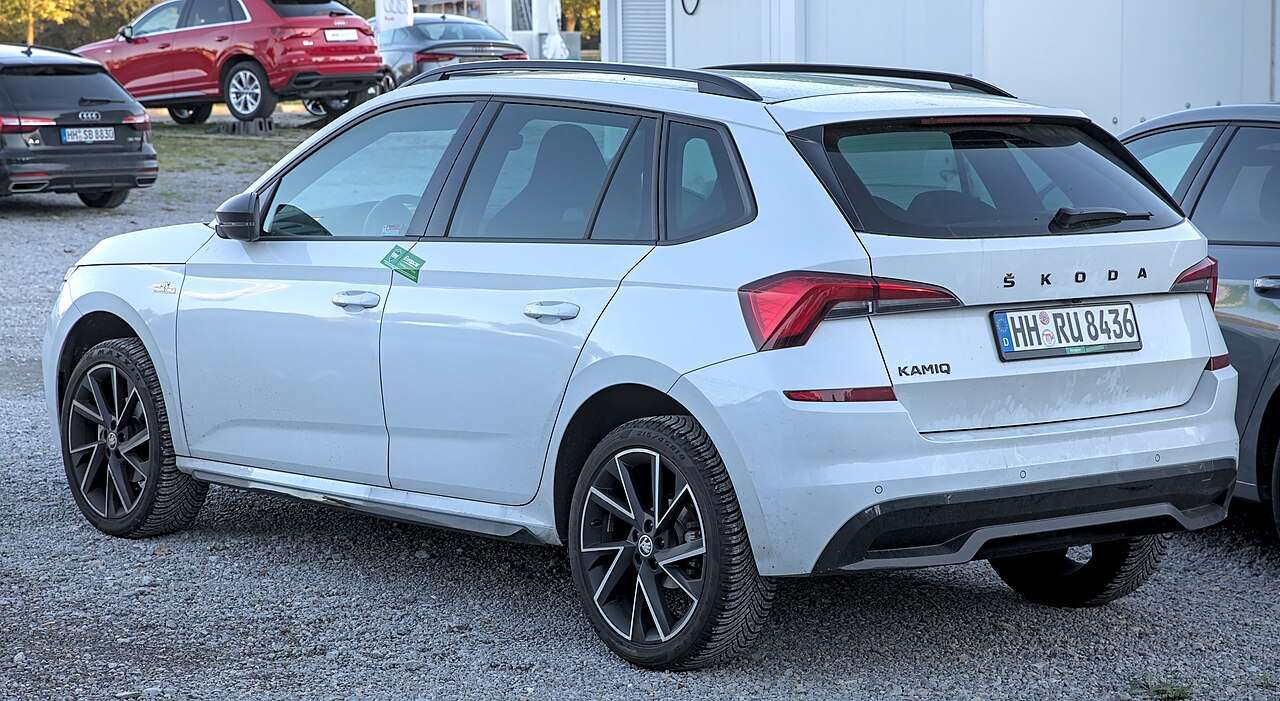
A November 2026 market check found 756 Kamiq adverts across the 2020–2024 year range. This is a broad availability snapshot, not search volume or a count of completed sales. It provides enough choice to be selective about history, transmission and condition rather than accepting the first locally available car.
Observed examples included a 2022 1.0 SE manual with 34,377 miles advertised at £11,350, a 2022 1.0 SE DSG with 42,487 miles at £12,170, and a 2023 1.5 SE L Executive DSG with 27,680 miles at £15,000. Asking prices change and these cars differ in equipment and condition. They should not be turned into a guaranteed valuation band.
Create a comparison set of the same engine, gearbox, approximate age and mileage. Add the cost of tyres, wheel refurbishment, a second key, the next service and any unresolved warning. A dealer’s warranty may be useful, but read exclusions, claim limits and who pays for diagnosis. A private-sale saving has to leave room for an independent inspection and contingency.
Do not pay a large premium for equipment you have not tested. A panoramic roof, heated seats, advanced lamps or connected functions add value only if they work and suit you. Conversely, a simpler trim with sensible wheels can be a strong long-term purchase if it has the right safety and comfort equipment for your needs.
Service history: oil, filters and the actual schedule
Request invoices and the digital service record before travelling. Look for dates, mileage, correct oil approval, replaced filters, plugs when required and brake-fluid work. “Serviced every year” is useful only when the records identify the work. A basic oil-and-filter visit is not automatically an extended inspection or a major service.
Škoda’s published UK menu separates oil-and-inspection servicing from extended scope and notes that brake fluid may be additional. Its advertised framework describes extended scope at year three/30,000 miles and then every two years/additional 20,000 miles. The car’s current VIN-specific schedule and service regime remain the authority; do not use a general menu to override flexible or time-based requirements.
Confirm the timing-drive guidance for the engine code. These TSI installations should not be given an invented timing-chain schedule or a universal five-year belt replacement rule. Ask Škoda or an appropriate specialist what is due now, what is due next and what evidence would show the work was completed. A belt-kit search is a shopping aid, not a service instruction.
For a low-mileage car, check calendar gaps and periods standing. For a higher-mileage example, check that servicing continued at the required frequency rather than stopping after the first owner. Reconcile MOT mileages and invoice dates. Missing history should affect both price and your willingness to buy; a fresh oil change cannot prove previous care.
Engine checks: 1.0 TSI
Start with a cold engine. Watch the warning lamps, listen for persistent abnormal noise and check that idle settles without misfire. A three-cylinder engine naturally sounds different from a four-cylinder, but vibration severe enough to suggest a fault should not be dismissed as character. Ask for diagnosis if the car hesitates, smokes or records an engine warning.
Inspect oil and coolant safely and according to the handbook. Look for fresh leaks, staining, damaged hoses or repeated top-ups in invoices. On the road, accelerate progressively through normal revs and check consistent response. A turbocharged engine should not need repeated throttle inputs to get past an unexplained flat spot.
Try the lower-output 1.0 on a suitable faster road and, where practical, with the sort of passenger load you expect to carry. A car that feels adequate on an empty forecourt loop may be less convincing on your regular hill or motorway slip road. That is a suitability decision rather than necessarily a fault.
Ask about oil consumption and any previous turbo, cooling or ignition work. A replaced component is not automatically bad news if the cause, invoice and subsequent operation are clear. Undocumented repeated repairs are more concerning than a single properly explained job. Let an independent workshop assess symptoms before buying parts or accepting a discount.
1.5 TSI: cold response, ACT and cooling checks
The 1.5 is appealing if the car will regularly carry family loads. Test it from genuinely cold at light throttle, including gentle take-up and low-speed changes. Repeat when fully warm. Persistent hesitation, bucking or poor take-up deserves a written diagnosis. Ask about applicable software work using the VIN; do not assume a forum report establishes a recall or that an update cures every symptom.
Observe the car under steady light load as well as normal acceleration. Cylinder-deactivation operation should not make the car unpleasant or unpredictable. A warning light, misfire or repeated stumble needs investigation of the actual cause, which might involve ignition, control software, fuel or another system. Do not accept a seller’s confident diagnosis without evidence.
Check coolant level cold and look for dried residue around accessible cooling components. Ask whether it has ever overheated or needed frequent coolant additions. A pressure test can be worthwhile if anything is suspicious. The proper budget is the diagnosed repair and associated labour, not the cheapest thermostat housing that appears online.
Engine oil needs the correct manufacturer approval, not just a familiar brand and viscosity. Parts searches can return several oil grades because the results cover different engines and years. Ask the servicing workshop to identify the required approval for the VIN and record it on the invoice. That is more useful than buying a large kit that happens to have “Kamiq” in its title.
Looking for a used Škoda Kamiq?Compare current Škoda Kamiq asking prices on eBay UK.See cars for sale ↓Manual versus DSG: a proper test drive
A manual should select gears cleanly, take up drive progressively and show no clutch slip under appropriate load. Listen for abnormal noise with the clutch engaged and disengaged, and test reverse as well as the forward gears. A high biting point alone does not diagnose a worn clutch, but poor engagement, shudder or slip needs assessment.
For a DSG, identify the gearbox code and current maintenance requirements. Ordinary TSI Kamiqs commonly use a dry-clutch seven-speed installation; do not prescribe a generic wet-clutch oil-and-filter package or a universal 40,000-mile interval. Equally, a gearbox with no routine wet-clutch service requirement is not immune to faults or free of repair costs.
Test drive and reverse selection, repeated parking manoeuvres, gentle crawling and normal acceleration from cold and hot. Persistent judder, delayed engagement, harsh shifts or a transmission warning should stop the purchase until a specialist has diagnosed it. Do not let the seller demonstrate only a fast, fully warmed-up drive.
Use the brake to hold the car on an incline rather than balancing it with the accelerator. Ask what a claimed “gearbox service” actually included and whether there are invoices for clutch or control-unit work. Separate routine servicing from internal repair when comparing estimates and warranties. They are different jobs with different potential costs.
Brakes, tyres, steering and suspension
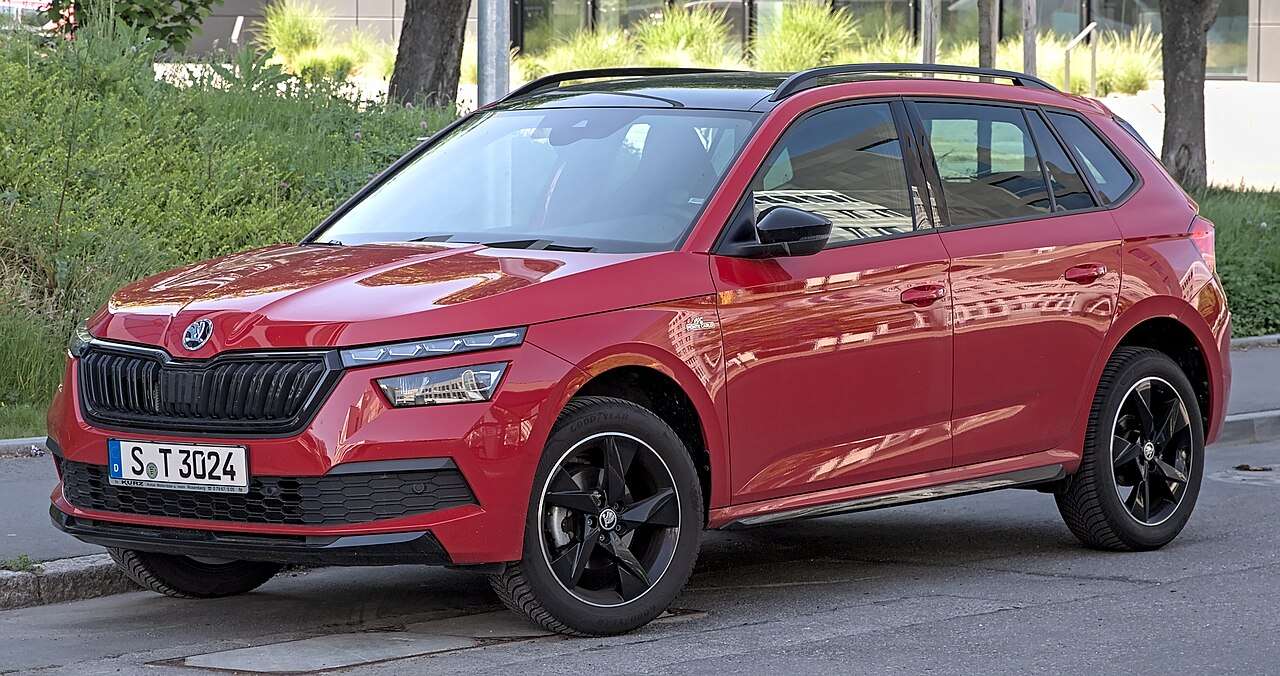
Inspect all four tyres for tread, date, damage and even wear. Matching appropriate tyres on each axle are preferable to an unexplained mixture. Look behind scuffed wheels for signs of harder impact and ask for alignment checks if wear is uneven. A fresh set of tyres can hide a previous pattern; invoices or an inspection may explain why they were replaced.
Drive over an uneven surface at sensible speed and listen for knocks, rattles or bearing hum. The Kamiq’s front-wheel-drive layout does not require Haldex servicing. It still needs sound suspension joints, dampers and alignment. Do not add imaginary SUV drivetrain costs, but do not ignore ordinary wear because the vehicle is relatively young.
Brake from different normal road speeds and check for vibration, grinding or a pull. Ask for pad and disc measurements rather than a casual “brakes good” description. Rear hardware can vary; identify whether the car has drums or discs and its parking-brake arrangement before ordering. Generic repair menus may display options that do not apply to the particular Kamiq.
Use the actual car’s handbrake and check that it holds appropriately. Do not assume an electronic parking brake simply because an online price menu offers an EPB option. Brake parts should match the vehicle’s codes and hardware, and safety-critical work should be completed by someone competent with the correct procedure.
Cabin, family use and body inspection
RAC quotes a 400-litre boot for the ordinary Kamiq, but a volume figure does not show how your luggage fits. Bring your pushchair, dog crate or regular shopping load. Try rear seats with the front seats in your own positions and check child-seat installation and access. A raised seating position may help you without making the car larger than it is.
Inspect the body dry in daylight. Check panel gaps, paint consistency, the boot floor and door seals for poor repairs or damp. Open every door and the tailgate, test the central locking and check that floor panels, load cover, tools and any puncture kit are present. Ask about accident repairs and verify any insurance category before paying a deposit.
Check air conditioning, heater, demisting, fans, windows and heated equipment. A weak air-conditioning system needs diagnosis rather than a promise of a cheap regas. Pair your phone, test the screen and audio and make sure parking sensors and camera work where fitted. Equipment advertised online can be generic dealer text rather than an accurate description of the car.
On a facelift example, check lamp and assistance specifications against the build record. Newer styling does not guarantee matrix lights, every safety option or a particular connected service. If the windscreen or front end was repaired, ask about sensor calibration. A clean MOT does not verify every cabin function.
Sourced UK service, parts and fitted-cost examples
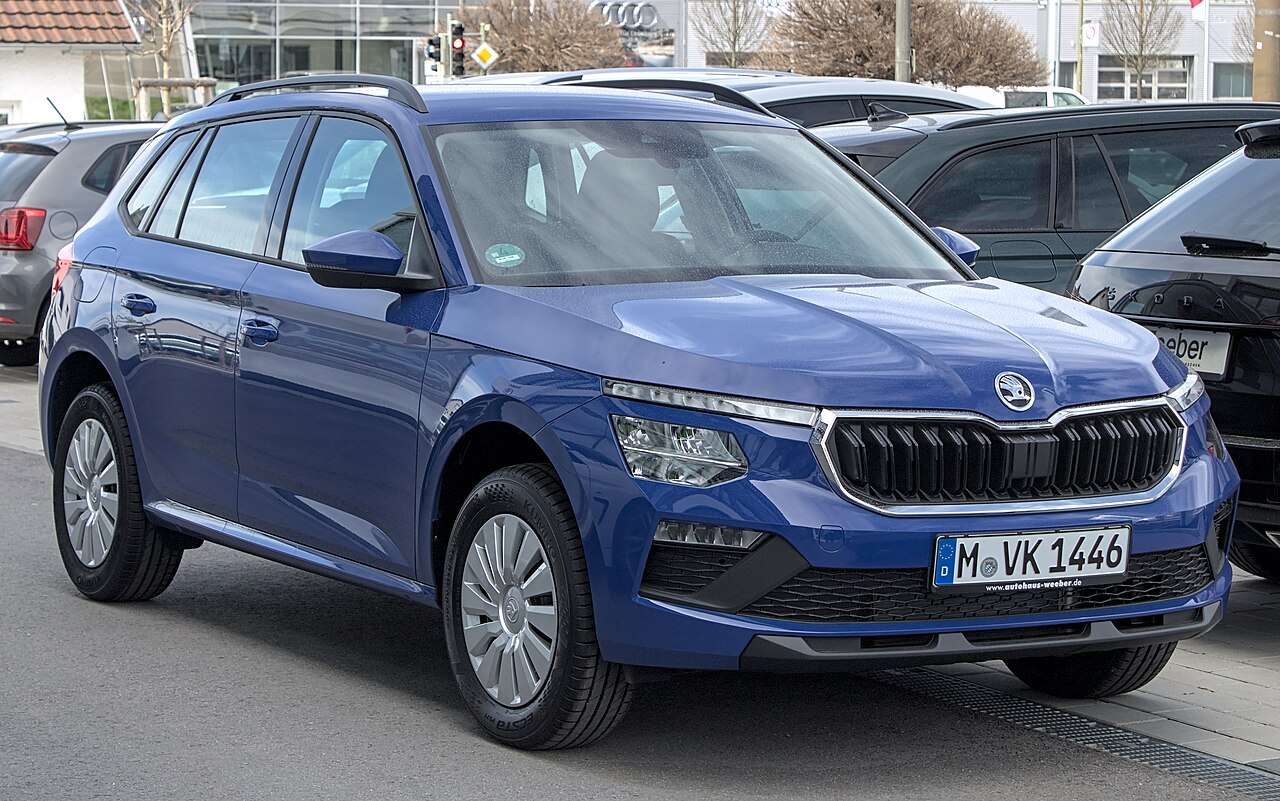
Fixter publishes Kamiq estimates by engine and trim. These are useful comparisons, but a current registration-based quote must confirm the job and hardware. Labour times below are the provider’s allowances, not cash labour bills. A dealer service package cannot be split into parts and labour by subtracting an unrelated online kit.
| Job | Parts evidence | Published time evidence | Fitted/package example |
|---|---|---|---|
| 1.0 TSI full service | Oil/air/cabin-filter and oil kit advertised around £67.38; verify approval | Fixter 1.0 SE: 55 minutes–1 hour 32 minutes | 1.0 SE full service £115–£181; interim £79–£124 |
| 1.5 TSI full/major service | Engine-specific filters, oil and plugs as required | 1.5 SE L example: 49 minutes–1 hour 38 minutes | SE L full £124–£195; major £207–£326 |
| 1.0 major service | A plugs/filter kit differs from a basic oil/filter basket | Confirm additional operations with the workshop | 1.0 Monte Carlo TSI example £194–£305 |
| Rear discs and pads | Only where discs are fitted; confirm exact rear hardware | Job-family examples about 42 minutes–1 hour 30 minutes | 1.5 Monte Carlo example £144–£226; confirm applicable specification |
For price comparison, use the Kamiq 1.0 TSI service-kit search or 1.5 TSI equivalent. Check the oil approval and kit contents with the supplier. A filter-only basket around £31.95 is not comparable with a kit including oil and plugs; a higher-priced branded kit may also contain a different oil specification.
Ask whether a fitted quotation includes VAT, consumables, disposal and diagnostic work, and whether the workshop accepts customer-supplied parts. Do not order components first and assume a garage will fit them or warrant them. For a gearbox fault, cooling leak or timing-drive concern, diagnosis is the first bill to establish.
Model-specific eBay service-parts table
These affiliate searches use our campaign and may earn us commission at no extra cost to you. Marketplace results change and can include incompatible parts. Confirm VIN, engine and gearbox codes, manufacturer approvals and actual fitted hardware before ordering.
| Service item | Model-specific eBay search | Fitment and buying notes |
|---|---|---|
| 1.0 TSI oil service kit | Compare 1.0 tsi oil service kit | Confirm oil approval, capacity and engine code. |
| 1.5 TSI oil service kit | Compare 1.5 tsi oil service kit | Do not assume the 1.0 kit is identical. |
| Spark plugs, 1.0 | Compare spark plugs, 1.0 | Correct heat range and specification required. |
| Spark plugs, 1.5 | Compare spark plugs, 1.5 | Match engine code. |
| Engine air filter | Compare engine air filter | Confirm the engine-specific application. |
| Cabin filter | Compare cabin filter | European vehicle; exclude Chinese-model listings. |
| Timing-belt kit | Compare timing-belt kit | Confirm schedule and full workshop parts requirement. |
| Cooling-system parts | Compare cooling-system parts | Diagnose the leak before choosing a housing or pump. |
| Front discs and pads | Compare front discs and pads | Match disc diameter and vehicle codes. |
| Rear brake service parts | Compare rear brake service parts | Identify rear hardware and handbrake type first. |
| Manual clutch kit | Compare manual clutch kit | Five/six-speed and engine applications differ. |
| Wiper blades | Compare wiper blades | Check model year and correct rear fitment. |
Hidden ownership costs
Large wheels, damaged tyres, missing keys, air-conditioning diagnosis and assistance-system calibration can change the real purchase price. Confirm whether the service plan covers only scheduled work or also any repairs; most promises need reading in detail. A fresh service does not mean brakes, tyres, clutch and DSG internals are all new.
Price the next year rather than just the deposit. Ask for the upcoming schedule, inspect consumables and obtain written estimates for faults. If a dealer agrees to repair something, make the work specific and retest it before collection. If the seller refuses a sensible independent inspection or cannot explain recurring warnings, another Kamiq is likely a better use of your time.
Viewing checklist
- Confirm European Kamiq identity, output, gearbox and build specification.
- Review invoices, mileage, oil approval and the VIN-specific schedule.
- Start cold and test 1.0 or 1.5 response before and after warming.
- Test manual clutch or DSG in reverse, traffic and ordinary acceleration.
- Inspect tyres, suspension, brakes and actual rear hardware.
- Try family luggage and every important cabin function.
- Get faults diagnosed and costs written down before paying.
Frequently asked questions
Is the Kamiq four-wheel drive?
The European Kamiq covered here is front-wheel drive. Do not budget for a four-wheel-drive coupling that is not fitted.
Is the 1.5 worth the extra money?
It is worth testing for regular loads and faster-road use. A good higher-output 1.0 may be sufficient, so compare condition and total costs as well as acceleration.
Do all Kamiq DSGs need the same oil service?
No. Identify the gearbox code and current maintenance requirement; generic wet-clutch packages should not be prescribed to a different installation.
Should I buy a facelift?
Consider it for the equipment and condition it actually offers. A documented pre-facelift car can be better value than a later one with faults or missing history.
Verdict
The Kamiq’s appeal is everyday usefulness. A clean, documented TSI with a smooth gearbox and sensible wheels can deliver that without an extravagant ownership budget. Choose the engine for your journeys, verify the specification and buy a car with faults resolved rather than explained away.
Research and sources
- RAC: Škoda Kamiq review — European model, engines and practicality.
- Škoda UK servicing and maintenance and recall information — service scope and VIN-based checks.
- Fixter Kamiq servicing and brake estimates — engine/trim budgeting examples; generic menus can include inapplicable options.
- UK asking-price and eBay-parts snapshots checked during November 2026; advertised figures and compatibility need fresh confirmation.
Explore the full buying guides hub.
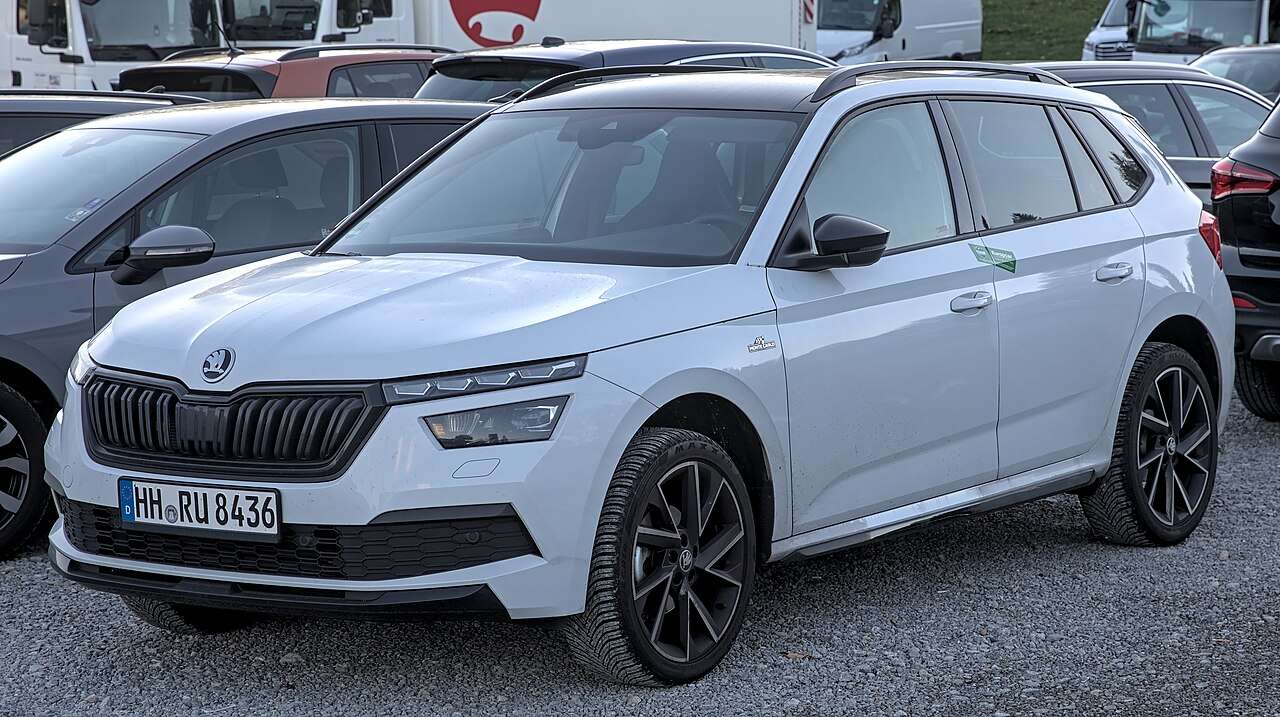
Featured photograph: Alexander Migl, CC BY-SA 4.0, via Wikimedia Commons. Resized for web.