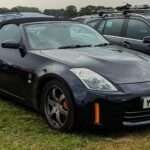
The Nissan 300ZX Z32 combined a wide, low body with a 3.0-litre V6, multi-link suspension and, in its fastest form, two turbochargers. It remains one of the most sophisticated Japanese performance cars of its era—and one that must be bought on condition rather than appearance.
Nissan 300ZX Z32 specifications
| Feature | Naturally aspirated | Twin Turbo |
|---|---|---|
| Engine | VG30DE 2,960cc DOHC 24-valve V6 | VG30DETT 2,960cc DOHC 24-valve V6 with twin turbochargers |
| Drive | Front engine, rear-wheel drive | |
| Transmission | Five-speed manual or four-speed automatic, depending on market and model | |
| Body | Two-seat or 2+2; fixed roof, T-top or convertible availability varied by market | |
| Chassis | Multi-link suspension front and rear; four-wheel steering fitted to selected versions | |
Nissan’s Japanese Heritage Collection lists 230PS for the naturally aspirated VG30DE and 280PS for the domestic-market twin-turbo VG30DETT. Export outputs and measurement standards varied, so use the correct market literature for an individual car.
Z31 versus Z32
Z31: 1980s 300ZX
The earlier, angular 300ZX arrived in 1983 and used the VG30E or turbocharged VG30ET. Its pop-up headlights and simpler chassis make it visually and mechanically distinct.
Z32: the 1989 redesign
The Z32 adopted a much wider silhouette, fixed covered headlamps, double-overhead-cam engines and multi-link suspension. This is the generation covered by this guide.
Love cars you don’t see every day?
Get forgotten cars, surprising motoring stories and the most interesting finds from Unusual Cars by email.
Free to join. No spam. Unsubscribe whenever you like. See our privacy policy.
Is it a Targa or a T-top?
Owners and advertisements often call a removable-roof 300ZX a “Targa”, but Nissan’s own material describes the factory arrangement as a T-top. Two separate roof panels lift out while a structural centre bar remains. Use both terms when searching, but recognise that they describe the familiar twin-panel roof rather than a single full-width removable panel.
Two-seater or 2+2?
The two-seat body has the shorter wheelbase and a different rear profile. The 2+2 adds rear seats and length, making it more practical but not genuinely spacious in the back. Do not assume that parts such as exhaust sections, roof panels, glass or rear body trim interchange between the two bodies. Nissan’s Heritage Collection confirms that both layouts were part of the Z32 range.
UK car or Japanese import?
Imports broaden the choice of engines, bodies, equipment and colours, but identity must be checked carefully. Decode the model plate and VIN, establish the original market, confirm when it entered Britain and compare the car with the appropriate specification. Japanese speedometers, lighting conversions, auction sheets and evidence of corrosion protection all belong in the history file.
Nissan 300ZX Z32 buying checklist
Body, structure and T-top leaks
- Inspect sills, jacking points, floor edges, chassis rails and suspension mounting areas.
- Check rear arches, lower quarters, boot floor, spare-wheel well and the metal hidden by trims.
- Examine front inner wings, radiator support and evidence of poorly repaired accident damage.
- Look for damp carpets, stained headlining and corrosion around the T-top drains and apertures.
- Check that both roof panels, storage bags, shades, seals and release mechanisms are present.
VG30 engine, timing belt and cooling
- View the car completely cold and listen for rattles, unstable idle or accessory noise.
- Demand dated evidence of timing-belt, tensioner and related service work rather than relying on mileage alone.
- Check radiator, hoses, water pipes, viscous fan, electric fan operation and evidence of overheating.
- Inspect for oil and coolant leaks in the tightly packaged engine bay.
- On a Twin Turbo, check for progressive boost, smoke, abnormal turbo noise and mismatched modifications.
Fuel, ignition and electrical systems
Aged injector connectors, ignition components, engine-bay wiring, sensors and vacuum hoses can create intermittent faults. Test hot restarting and idle after a proper road test. Warning lights should illuminate during the start-up check and then go out correctly; removed bulbs can conceal problems.
Transmission, steering and chassis
- Manual cars: check clutch slip, release-bearing noise and synchromesh in every gear.
- Automatic cars: require clean engagement, smooth changes and evidence of fluid maintenance.
- Listen for propshaft, driveshaft, differential and wheel-bearing noise.
- Check every bush, ball joint, damper and tyre for age or uneven wear.
- Where fitted, make sure the HICAS rear-steering system has not been neglected or crudely removed.
Modifications
Many Z32s have boost controllers, induction kits, exhausts, larger injectors, altered ECUs, coilovers or HICAS-delete parts. A coherent, documented package can be valuable; anonymous parts, cut wiring and unexplained boost are reasons for a specialist inspection. Establish the engine’s health and supporting fuel and cooling upgrades before accepting a claimed power figure.
The 1992 Twin Turbo originally featured here
This page began with a 1992 2+2 Twin Turbo T-top manual advertised after restoration and modification. The seller described Nismo injectors, an uprated fuel rail, ECU changes, coilovers, a replacement timing belt and resealed roof panels. Those details record that individual expired listing; they are not independent proof of current mileage, output or condition. The photographs remain a useful example of a modified Z32.
Frequently asked questions
What is the difference between VG30DE and VG30DETT?
Both are 3.0-litre double-overhead-cam V6 engines. The VG30DE is naturally aspirated; the VG30DETT adds two turbochargers and the associated intake, exhaust, cooling and control hardware.
Did all 300ZX Z32s have four-wheel steering?
No. Equipment differed by engine, grade, year and market. Inspect the individual car and its model information rather than applying one specification to every Z32.
What is the most important 300ZX buying check?
A specialist inspection of the structure, cooling system, timing-belt history and engine condition. A cheap, modified Z32 can require far more money than buying a documented, structurally sound car.
Research note: generation dates, body layouts and core engine specifications were checked against Nissan’s Heritage Collection and Nissan’s official Z-car history. Market specifications vary.