UNUSUAL CARS MODEL GUIDE
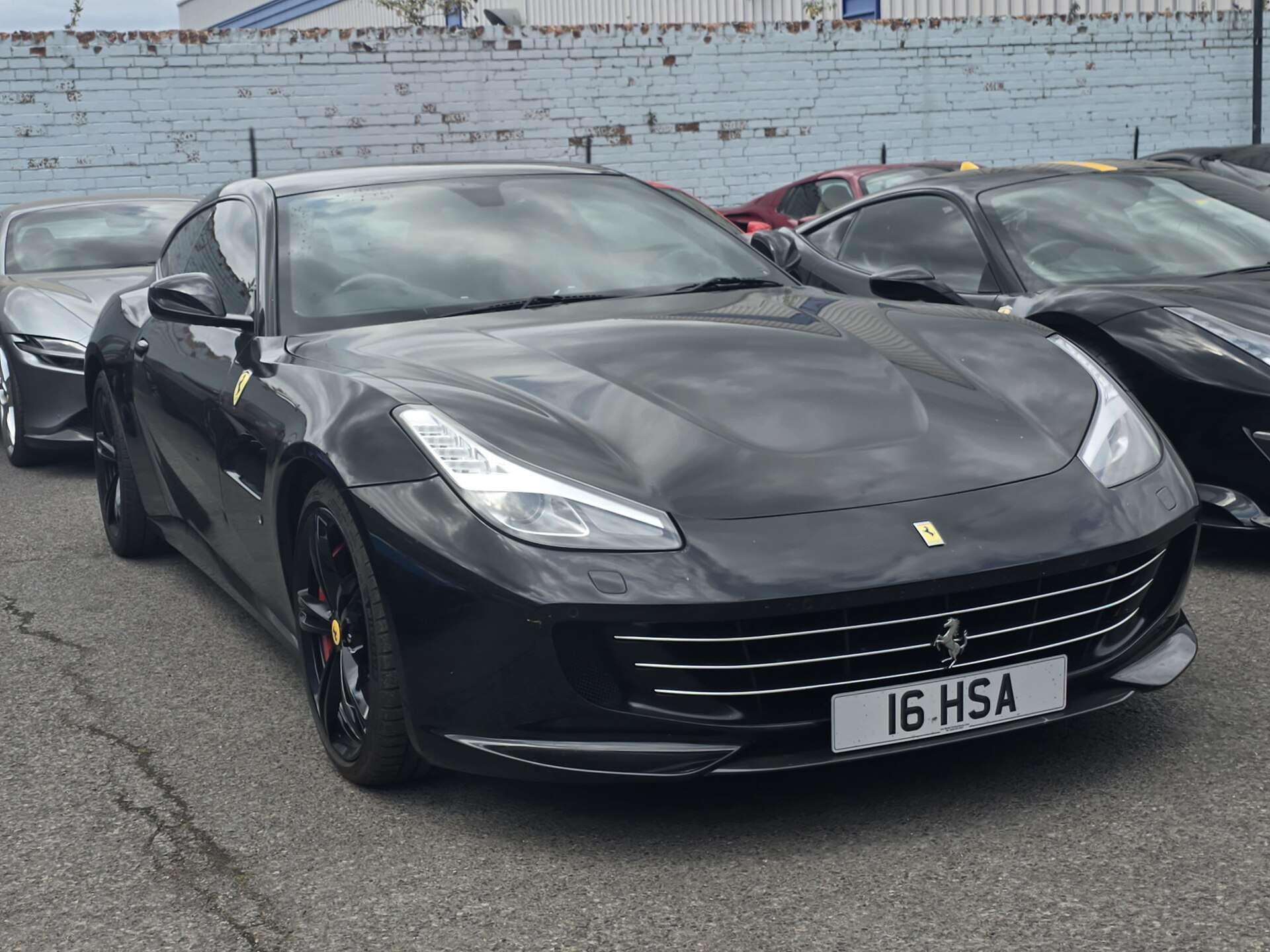
The Ferrari FF and GTC4Lusso are four-seat shooting-brake grand tourers that combine a front-mid-mounted V12 with Ferrari’s compact 4RM four-wheel-drive system. The FF arrived in 2011; the GTC4Lusso replaced it in 2016 with more power, rear-wheel steering and revised electronics. A rear-wheel-drive V8 GTC4Lusso T broadened the later range.
Quick answer: these are unusually practical Ferraris, but they remain technically complex. Before buying, identify the precise V12 or V8 version and commission a diagnostic and mechanical inspection of the 4RM power-transfer unit on four-wheel-drive cars, dual-clutch gearbox, suspension, carbon brakes, cooling, electronics, body and complete service history.
Featured image: grey Ferrari FF side view. Photograph by nakhon100, CC BY 2.0, via Wikimedia Commons; locally hosted.
FF: four seats and Ferrari four-wheel drive
FF stands for Ferrari Four: four seats and four-wheel drive. Pininfarina’s shooting-brake body provided a 450-litre luggage compartment with the rear seats raised and greater capacity when folded. The 6,262cc V12 produced 660hp and drove the rear wheels through a seven-speed dual-clutch transaxle.
The patented 4RM system is not a conventional transfer case. A separate two-speed power-transfer unit at the front of the engine sends controlled torque to the front wheels in the lower gears when conditions demand it. Ferrari stated that the layout saved roughly half the weight of a traditional four-wheel-drive system and preserved a low centre of gravity.

GTC4Lusso and GTC4Lusso T
| Version | Engine and drive | Power | 0–100km/h |
|---|---|---|---|
| FF | 6,262cc V12, 4RM | 660hp | 3.7sec |
| GTC4Lusso | 6,262cc V12, 4RM-S and rear-wheel steering | 690cv | 3.4sec |
| GTC4Lusso T | 3,855cc twin-turbo V8, rear-wheel drive | 610cv | 3.5sec |
The V12 GTC4Lusso evolved the system into 4RM-S, integrating four-wheel drive with rear-wheel steering. It also gained a new cabin interface and sharper body. The later T uses a twin-turbo V8 and drives only the rear wheels; that distinction eliminates the front power-transfer unit but changes the car’s character, sound and servicing needs.

Love cars you don’t see every day?
Get forgotten cars, surprising motoring stories and the most interesting finds from Unusual Cars by email.
Free to join. No spam. Unsubscribe whenever you like. See our privacy policy.
Service history and diagnostic evidence
Check the VIN, original market, paint, trim and options against the build record. Desirable extras can include panoramic roof, suspension lifter, cameras, passenger display and extensive carbon trim. Confirm books, keys, tools, tyre inflator and charger. Ferrari warranty or service-plan claims should be supported by dated invoices rather than assumed from age.
A proper diagnostic scan should cover every control unit, record stored and historic faults and be interpreted by a specialist familiar with the 4RM cars. Regular use is generally healthier than prolonged storage, but mileage must align with seat, steering-wheel, switch and luggage-area wear. Check open recall or campaign work against the chassis number.
4RM power-transfer unit and drivetrain
The power-transfer unit is the largest model-specific concern on the FF and V12 GTC4Lusso. Leaks, hydraulic faults, abnormal noises or dashboard messages require immediate investigation. Replacement is expensive, although specialists can now rebuild some units. The inspection should identify whether repair work has been completed, by whom and with what warranty.
The rear dual-clutch gearbox should engage smoothly when cold and hot. Test reverse, creeping, full-throttle changes and manual selection while monitoring warnings. Inspect driveshafts, differentials and fluid leaks. On the V8 T, concentrate on turbocharger plumbing, cooling, oil leaks and correct rear-drive transmission operation; do not assume that absence of the PTU makes the rest of the car simple.
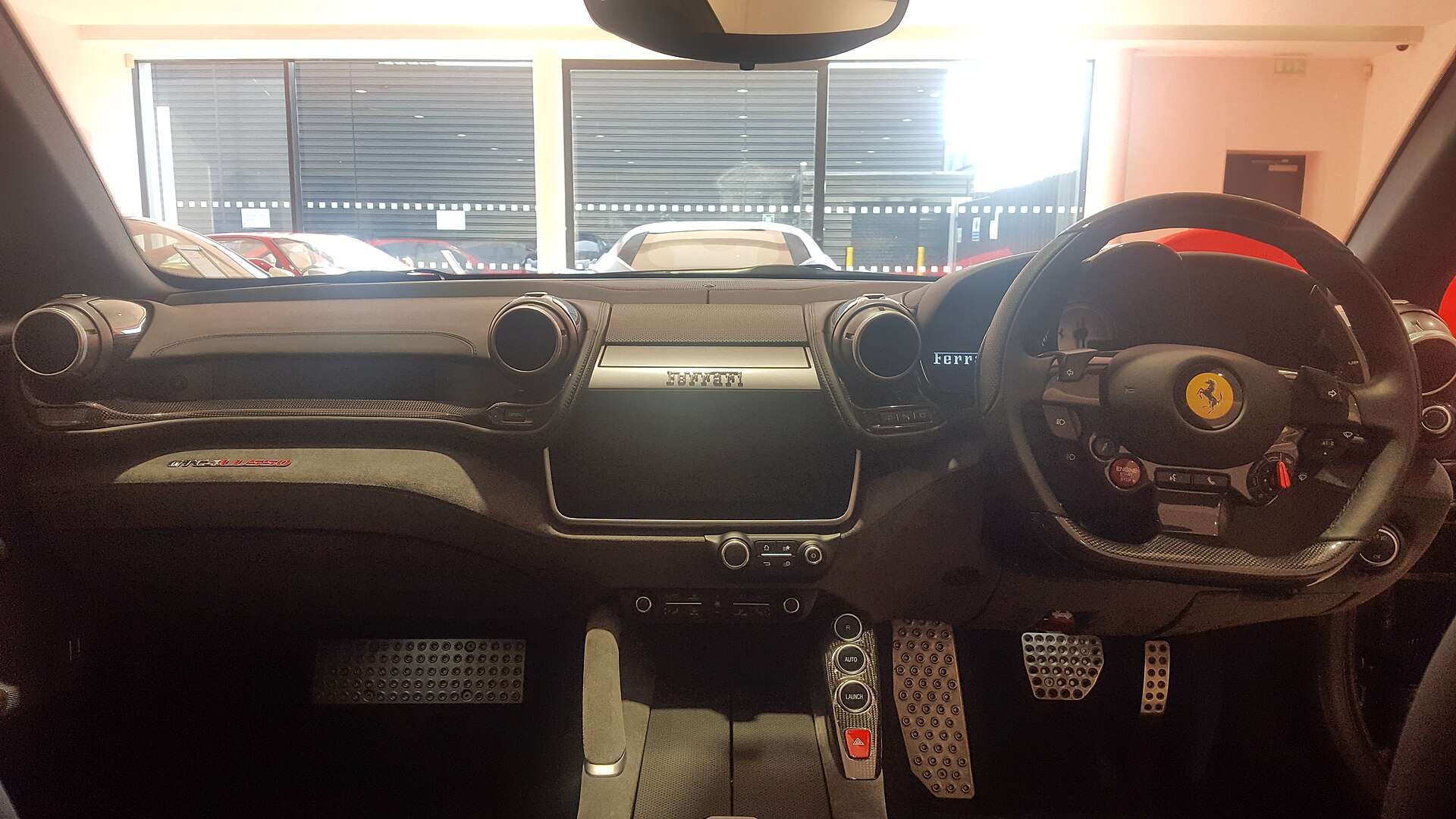
Suspension, brakes, body and cabin
Test magnetorheological dampers in every driving mode and listen for knocks from bushes, links and ball joints. The cars are heavy and tyre-sensitive, so uneven wear can reveal alignment or suspension problems. Carbon-ceramic discs should be checked for edge damage and measured wear; wheels need inspection for pothole cracks and buckles.
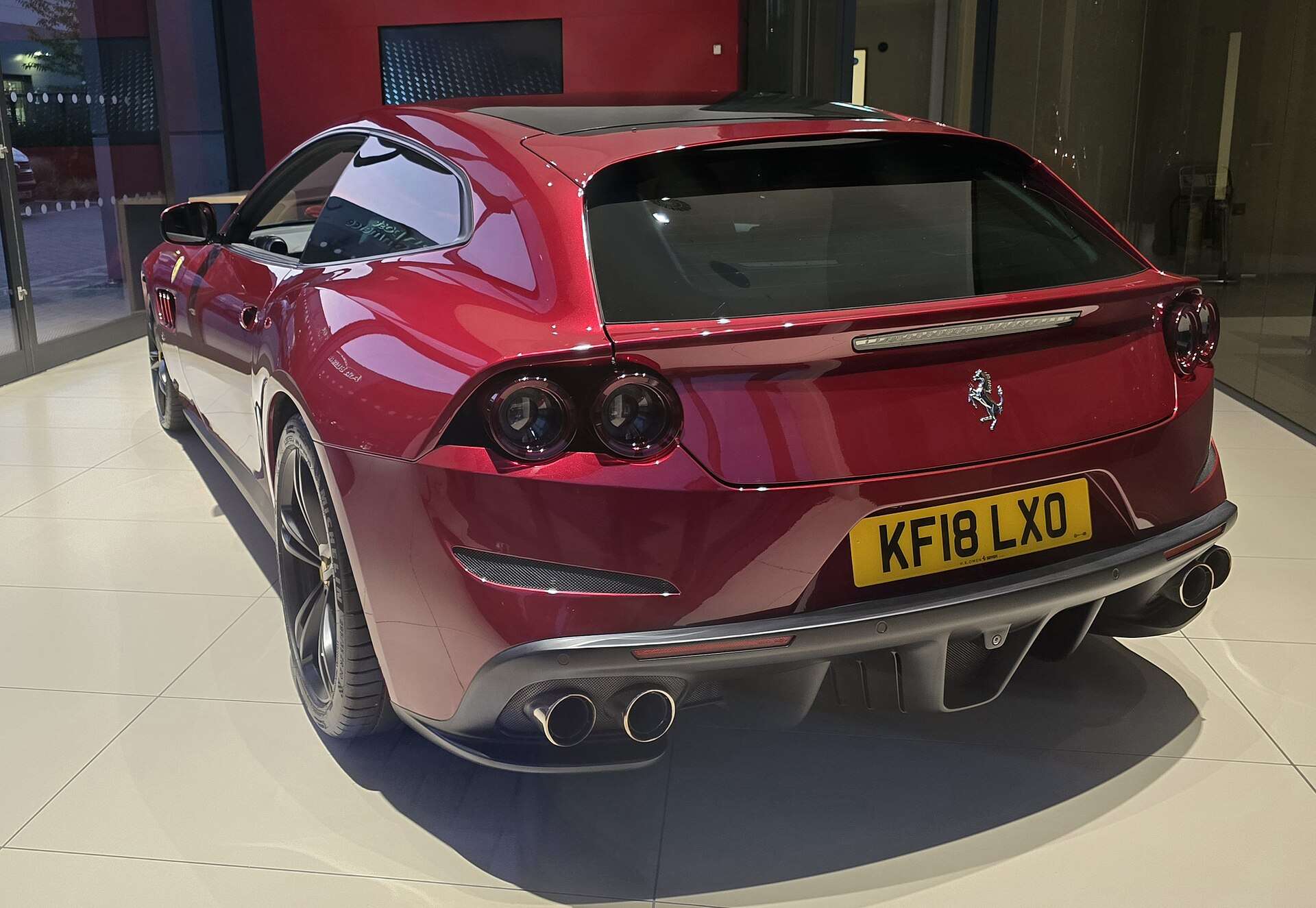
Examine the aluminium body, long doors, nose, sills and undertrays for repair or grounding. Operate the tailgate repeatedly and check for water in the luggage area. Panoramic roofs need inspection for damage and sealing. Inside, look for lifting leather, sticky coatings and worn seat bolsters, then test infotainment, cameras, parking sensors, climate, seat adjustment, window mechanisms and every display.

Sources and further reading
- Ferrari: FF archive and specifications
- Ferrari: GTC4Lusso technical specifications
- Ferrari NV: FF and GTC4Lusso technical overview
- Ferrari: GTC4Lusso T press and technical information
Continue the Ferrari story
Explore the complete Ferrari hub. Continue with the Ferrari 612 Scaglietti and Ferrari F12berlinetta.
Frequently asked questions
What does Ferrari FF stand for?
Ferrari Four, referring to four seats and four-wheel drive.
Are all GTC4Lussos four-wheel drive?
No. The V12 GTC4Lusso uses 4RM-S four-wheel drive, while the twin-turbo V8 GTC4Lusso T is rear-wheel drive.
What is the FF power-transfer unit?
It is the compact front transmission that supplies controlled torque to the front wheels in the lower gears on 4RM-equipped cars.
How many seats do the FF and GTC4Lusso have?
Both are genuine four-seat grand tourers with a hatchback luggage area and folding rear seats.
What should be checked before buying an FF or GTC4Lusso?
Obtain a complete diagnostic scan and inspect the 4RM power-transfer unit where fitted, dual-clutch gearbox, suspension, carbon brakes, cooling, electronics, body and service history.