IN-DEPTH BUYING GUIDE · SECOND-GENERATION UK DIESEL MODELS
The Volkswagen Tiguan Mk2 2.0 TDI is the sort of used car that can earn its place through daily usefulness. It offers an elevated driving position, a practical rear compartment and a large choice of manual, DSG, front-wheel-drive and 4Motion examples. There are enough cars on the market to be selective about history, which is fortunate: servicing the engine alone does not account for every expensive component fitted to one of these SUVs.
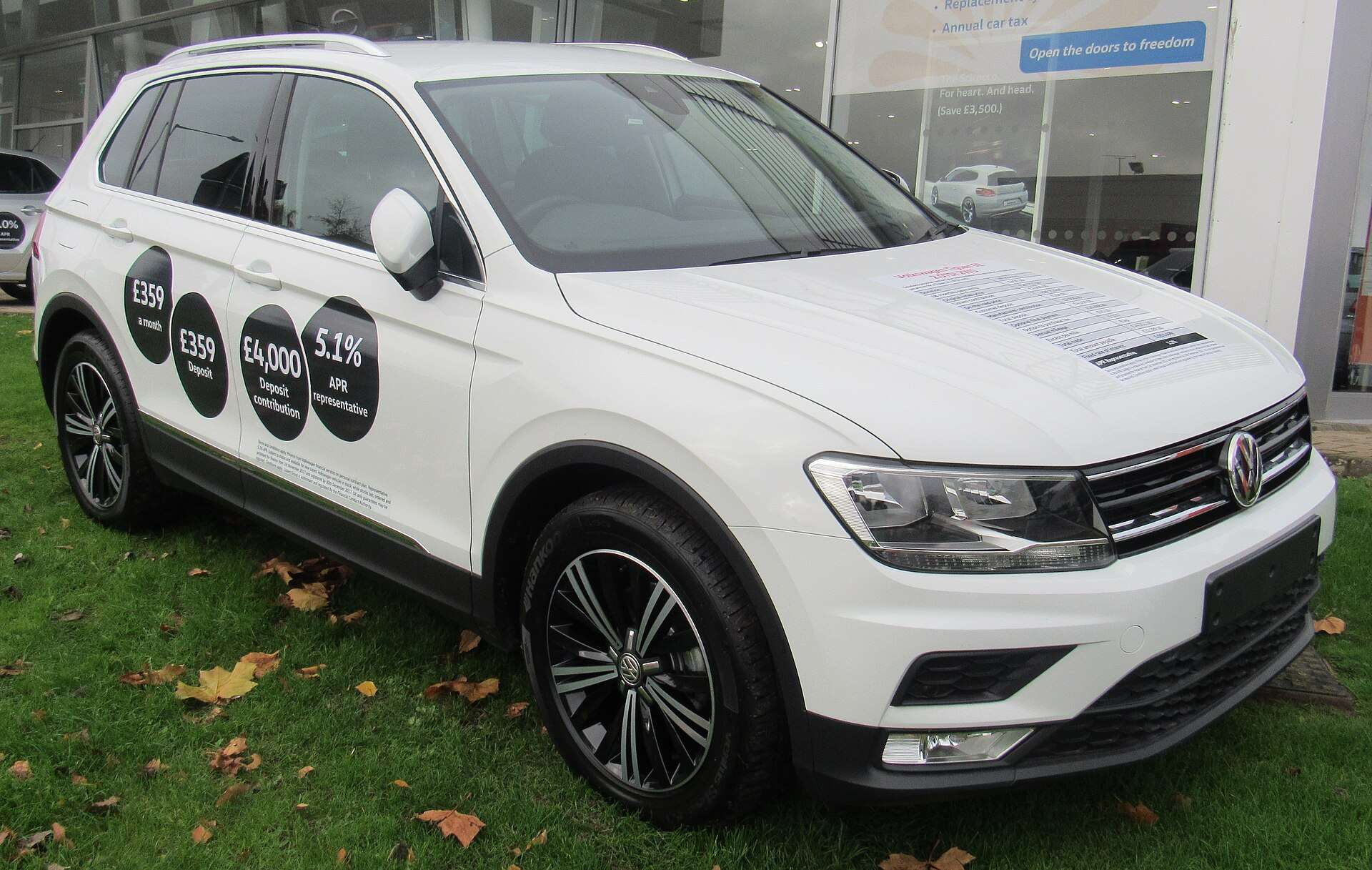
This guide focuses on the second-generation Tiguan introduced in 2016, including later facelift diesel cars before the third-generation changeover. It covers ordinary 2.0 TDI versions, with notes on the longer Allspace where relevant. The petrol Tiguan R has its own guide. R-Line trim is not the same car as a Tiguan R, and 4Motion is not fitted to every Tiguan.
The buying verdict
Our starting point: a well-documented 2.0 TDI with the power output, gearbox and drivetrain you actually need. For many families a sensible-wheel, front-wheel-drive example is enough. Choose DSG or 4Motion because they suit your use, with their maintenance and condition established.
Spend on: a proper inspection, timing-belt evidence, gearbox/coupling servicing where fitted, sound tyres and fully working equipment. Do not buy around: an unresolved AdBlue countdown, repeated DPF warnings, persistent coolant loss, DSG shudder or a 4Motion system whose operation is being assumed from its badge.
Which 2.0 TDI Tiguan should you choose?
Begin with your real journeys and load. A middle-output diesel can be a flexible family all-rounder without needing the strongest engine. Higher-output and differently equipped versions can change gearbox, drivetrain, brakes and repair costs. Identify the engine code, build date and actual transmission rather than ordering or budgeting from a generic “2.0 TDI” description.
The range evolved through the Mk2’s life, including the facelift and emissions-system changes. Registration years can overlap generations and specifications. Later technology does not make service history less important; it can bring different oil, emissions, electrical and software requirements. A 2016 or changeover-year advertisement needs checking against the body and build information.
| Choice | Why it may suit you | Extra buying check |
|---|---|---|
| Front-wheel drive | Ordinary family use without needing an additional rear-drive system | Still inspect tyres, traction, suspension and the actual engine/gearbox history. |
| 4Motion | Additional traction for suitable journeys or conditions | Coupling operation, fluid history, pump/strainer service scope, rear final drive and compatible tyres. |
| Manual | Drivers who prefer direct gear selection | Clutch, dual-mass flywheel, hydraulics, gear selection and towing-related wear. |
| DSG | Convenient traffic and long-distance use when healthy | Exact gearbox code, appropriate servicing and cold/warm behaviour. |
| R-Line / larger wheels | Appearance and equipment appeal | Ride, tyre cost, wheel damage, actual brakes and option-dependent repairs. |
| Allspace | Longer-body carrying flexibility and the fitted seating arrangement | Confirm seat count, rear access, belts, folding mechanisms, load area and dimensions; do not assume the ordinary five-seater’s measurements. |
SE, Match, SEL, R-Line, Life and Elegance names appear across different periods. Equipment varies with model year and options. Verify the actual lights, climate control, seats, infotainment, camera, adaptive cruise and roof equipment on the car. A badge or copied dealer specification is not proof that every feature is present.
Try the seating and ride before buying a large-wheel car. Low-profile tyres and sporting presentation may be less comfortable on your local roads. Optional DCC/adaptive damping changes the inspection and replacement-parts requirements. A simpler car in excellent condition can be more satisfying to own than a heavily equipped example with several expensive faults.

Is diesel appropriate for the way you drive?
A Tiguan diesel is most convincing when it regularly covers sustained journeys and reaches normal operating temperature. School runs and brief cold trips may be a poor match if they dominate its use. Fuel savings need considering alongside the condition and operation of the DPF, EGR and SCR systems, rather than assuming diesel is automatically the cheapest family choice.
Volkswagen’s current servicing page recommends fixed servicing for lower annual mileages, city/short-trip use and demanding work such as towing or carrying passengers. That is a useful reminder that service regime should fit use. A flexible-service history is not inherently wrong, but it needs to make sense for the car’s actual operation and recorded requirements. Source: Volkswagen UK servicing guidance.
Check the individual registration’s tax, emissions status and clean-air charging position through official services. Do not infer compliance from a trim name or the presence of an AdBlue filler. If you plan to tow, verify the exact car’s permitted weights, your licence and the loaded combination from the appropriate official and vehicle records; another Tiguan’s towing claim is not a substitute.
UK prices and buying-interest evidence
The plentiful used market means you can compare condition and completed maintenance. Separate front-wheel drive from 4Motion, manual from DSG, five-seat cars from Allspace, and pre-facelift from facelift. A low price on a high-mileage former workhorse should not be compared directly with a much newer, lower-mileage retail car without accounting for those differences.
Current individual eBay asking examples included a 2017 2.0 TDI 4Motion SE Nav manual at £9,500 with 87,444 advertised miles; a 2019 Match manual at £11,795 with 71,000 miles; a 2018 R-Line DSG at £15,910 with 60,329 miles; and a 2021 4Motion R-Line DSG at £20,990 with 42,543 miles. These are advertisements, not sold results or a valuation survey. Their specification, condition and seller statements still need checking.
A seller advertising a recent cambelt is offering a reason to request the invoice, not proof of a complete job. Ask whether the water pump was included, which kit and pump were fitted, when the work was done and what mileage was recorded. A history claim should be traceable to the car and the garage.
Build a total-cost shortlist. Add the work each car actually needs: tyres, brakes, engine service, scheduled filters, transmission/coupling maintenance and any diagnosed repair. A cheaper DSG 4Motion with no evidence of those extra services may need more spending than a dearer, properly maintained front-wheel-drive car. Keep a contingency after purchase instead of stretching solely for newer trim.
Engine inspection: start cold and look for a coherent history
Arrange the car cold and ask the seller not to run it beforehand. Watch the warning-light check, the first start and the idle as it settles. A diesel has a characteristic sound, but persistent metallic noise, a recurring misfire, excessive vibration or smoke requires investigation. A warmed engine does not provide the same evidence as a genuine cold start.
Examine accessible areas for oil and coolant leaks, damaged hoses, improvised wiring and signs of recent work. An undertray can hide a leak before it reaches the driveway, so include a lift inspection. If the engine bay has just been cleaned, recheck it after the road test and ask why it was cleaned.
Oil history should show dates, mileages and the correct VW approval for the engine, not merely “fully synthetic”. Different oils can share the same viscosity without meeting the same approval. Later applications and revisions must be checked individually. The quantity in a retail kit is not an instruction to empty the whole container into the sump.
Once warm, the engine should pull consistently under ordinary acceleration, without repeated hesitation, warning messages or reduced-power operation. A boost-related fault can involve hoses, controls, sensors, turbocharger equipment or another system. Get a diagnosis rather than pricing every symptom as a cheap pressure sensor.
Ask about engine, turbocharger, injector and cooling repairs and request the underlying invoices. A major component replacement can be sensible investment when the cause was established and related work completed. It can also be an incomplete attempt to cure a recurring problem. The seller should be able to explain the sequence.
Cooling system and water-pump checks
Check the expansion-tank level safely when cold and look for dried deposits around accessible joints, housings and the pump area. Ask whether the level drops, whether a warning has appeared and whether the seller has repeatedly topped up. Coolant loss needs a cause, not a promise that this is normal for a diesel.
Assess warm-up behaviour and cabin heat on the road test. An engine that takes unusually long to reach temperature, loses temperature on a steady journey or produces inconsistent heat deserves examination. Temperature-control faults can also affect emissions-system operating conditions. Do not open a hot pressurised cooling system at a viewing.
If a pump or related housing needs replacing, identify the correct design for that engine and build. The cheapest advertised pump is not necessarily the right application. Ask the garage to explain the belt, coolant, seals and tests included in a combined job, particularly if a previous repair has not stopped the leak.
Timing belt: evidence, schedule and the complete job
The ordinary 2.0 TDI applications covered here need their engine-specific timing-belt requirement established. Do not confuse them with a petrol engine or borrow an interval from an older PD diesel. Ask Volkswagen or a qualified specialist to confirm the current requirement for the VIN, then compare it with the invoice history and actual age/mileage.
Darkside’s public workshop page supplies broad common-rail guideline intervals, but explicitly says they are not necessarily accurate for every vehicle. That qualification matters. A useful buying guide should not turn a broad workshop table into a universal manufacturer instruction for every Mk2 Tiguan.
A satisfactory invoice identifies the car, engine application, date, mileage and actual components. Establish whether the tensioner, rollers, specified fixings and water pump were replaced, and what coolant and checking work were included. An invoice simply saying “belt” leaves unanswered questions, particularly where an expensive combined job is being used to justify a premium.
If there is no credible evidence and the requirement is approaching or uncertain, obtain a vehicle-specific quote before buying. An external glance cannot certify the condition or age of the entire timing assembly. A loose kit price also does not define the cost of access, fitting, fluids, correct tools and checks.
DPF, EGR, AdBlue and emissions-system health
A DPF is part of the car’s normal equipment, not a problem in itself. The important questions are whether the engine reaches the right operating conditions, the system can manage regeneration and any warnings have a diagnosed cause. Repeated short trips, temperature faults, sensors, EGR or injection problems can complicate that picture.
Commission a VAG-aware diagnostic assessment that interprets relevant current and stored faults, temperature/pressure readings and regeneration information where available. A basic code reader showing no engine light is a narrower check. Ask whether faults were recently cleared, and have incomplete monitoring or implausible data explained.
An AdBlue warning countdown is not automatically a fluid-top-up issue. Level, quality, supply, heating, dosing, NOx sensing, wiring and control problems require distinguishing. Have the cause repaired and the outcome demonstrated before buying around the warning. Do not rely on a seller’s claim that a motorway run will cure every message.
A DPF-cleaning or forced-regeneration receipt should say why the work was needed and what root cause was addressed. Repeated cleaning without a coherent diagnosis is not reassuring maintenance. Ask for findings and follow-up evidence, not just a list of services bought.
Check whether the emissions hardware and software remain correctly configured. A road-car purchase should have the proper equipment functioning, with any suspected deletion or bypass investigated and resolved. A current MOT pass or the absence of visible smoke cannot establish the condition of every emissions component.
Love cars you don’t see every day?
Get forgotten cars, surprising motoring stories and the most interesting finds from Unusual Cars by email.
Free to join. No spam. Unsubscribe whenever you like. See our privacy policy.
DSG: identify the gearbox and test it properly
The phrase “seven-speed DSG” is not a sufficient parts identifier. Gearbox families and specifications vary across the range and production life. Obtain the transmission code and have a specialist confirm the appropriate fluid, filter/pan arrangement, interval and procedure. Do not apply a dry-clutch small-engine story to every diesel Tiguan, or use a service kit from a different wet-clutch unit.
Try drive and reverse engagement, slow crawling, junctions, gentle acceleration and repeated stops. Once warm, assess ordinary shifts and a sensible acceleration demand on a safe road. The car should respond consistently without a long delay, repeated shudder, harsh engagement or warning message. A short cold-only test leaves useful evidence missing.
Ask whether the gearbox has been serviced and why any adaptation, software, clutch or mechatronic work was performed. A reset can be part of an appropriate repair process; it is not a diagnosis on its own. Fresh fluid is maintenance, not a guaranteed cure for worn hardware or an unresolved control fault.
A proper quote should name the gearbox and state fluid approval, parts, labour, VAT and checks. Establish what is drained and replaced rather than comparing only litres of oil. A supplier’s broad fitment list or an invoice for “automatic service” is weaker than one identifying the actual transmission and work.
Darkside’s selected Mk7-platform common-rail service menu lists a DSG oil/filter service at £360 including VAT, but requires contacting it for an updated accurate price. Treat this as a platform-menu example for discussion, not a confirmed quotation for every Tiguan transmission. APS also publishes different prices by DSG code, reinforcing the need to identify the unit before comparing.
4Motion: the coupling and rear differential are separate
A 4Motion badge does not prove that the rear-drive system is operating correctly. Inspect the service record and ask a knowledgeable workshop to assess relevant faults, pump/coupling operation and drivetrain condition. A car can drive around town without giving its owner a clear demonstration of every traction function.
Coupling oil and rear differential gear oil are different service items. Ask precisely what has been changed, using which fluids and procedure. For the coupling fitted to the car, establish whether the service includes pump removal and strainer inspection/cleaning where appropriate. A generic “Haldex service” label may not answer that question.
Do not assume a replaceable external filter is fitted merely because an older-generation service kit contains one. Coupling design and service requirements need identifying. A blocked strainer, failed pump, wiring issue or control problem should be diagnosed before buying a replacement assembly on guesswork.
Inspect all four tyres for correct sizes, ratings, construction and compatible wear. A random mix of partly worn tyres is a poor starting point for evaluating an all-wheel-drive car. During normal manoeuvres and acceleration, note binding, shudder, vibration and noises and have them investigated.
If you do not need 4Motion, front-wheel drive can be a sensible way to avoid additional components. If you do need it, budget for maintaining it. Good tyres remain essential to braking and winter grip whichever drivetrain is fitted; the badge is not a substitute.
Manual clutch, flywheel and towing wear
A manual should select all gears cleanly both cold and warm, with a progressive clutch and normal pedal return. Try reverse and low-speed manoeuvres, listen for unusual noises and assess vibration. Do not use a deliberately abusive stall or maximum-load test during a viewing.
A dual-mass flywheel, clutch, hydraulic fault or engine-running issue can influence what you feel. Ask a specialist to identify the cause before accepting a quote for just a clutch kit. A meaningful invoice or estimate states whether the flywheel was inspected/replaced and what associated parts and fluids are included.
Where a towbar is fitted, ask what was towed, how frequently and how the car was maintained for that use. Inspect the mounting, electrical socket, wiring and vehicle-specific installation or coding evidence. Check the caravan/trailer combination against the actual plated limits and official requirements. A towbar’s presence is not proof that every proposed load is suitable.
Suspension, brakes and tyre costs
A family SUV can hide significant wear behind an apparently smooth local drive. Test a normal uneven road, listen for knocks and assess steering consistency and braking direction. Have arms, bushes, joints, links, springs, dampers and wheel bearings inspected on a lift.
If DCC/adaptive dampers are fitted, establish that the system works and that replacement parts match the specification. A previous owner fitting a cheaper conventional component without a coherent conversion can change the car’s behaviour and warnings. Modifications need documentation and an insurance check.
Inspect tyre inner shoulders and wheel barrels where safe. Larger R-Line wheels can bring higher replacement costs and pothole exposure. Check for buckles, cracks, repairs and uneven wear, and find out why new tyres were fitted immediately before sale. Alignment may be necessary after repairs, but it cannot fix worn joints or accident damage.
Braking should be progressive, without judder, pulling or dragging. Inspect disc inner faces and pads, hoses and pipes. Test the electric parking brake and any fitted auto-hold function. Rear brake work requires the appropriate procedure and equipment; it is not a reason to force a mechanism back by hand.
Use brake PR codes and physical dimensions to choose parts. Trim name, wheel diameter and a broad “Mk2 TDI” listing are not enough. A quote should separate the axle and components being replaced and include sensors or related items where required.

Bodywork, panoramic roof and water ingress
Inspect dry paint in daylight. Compare panel gaps, colour, texture and the fit of lights and bumpers. Look for overspray, distorted mounts and disturbed fixings. An expensive-looking R-Line bumper or replacement headlamp can be a cosmetic change or part of a repair, so obtain the explanation and assess the underlying structure.
Lift the load floor and inspect storage compartments and carpet edges. Feel for damp, examine the headlining and look for persistent condensation, mould or tide marks. Water ingress needs tracing rather than being dismissed as a valet. A dry upper mat can conceal a wet floor underneath.
If a panoramic roof is fitted, operate it according to the handbook and check the surrounding trim and seals. Listen for mechanical strain and inspect for leaks. Do not force a reluctant panel. Ask a workshop to identify whether a problem involves drainage, seals, alignment, mechanism or another cause before comparing repair prices.
Try every door, window and lock, the tailgate and its fitted controls, the rear wiper/washer and both keys. Confirm the parking sensors and camera work rather than accepting one successful demonstration. Intermittent functions and improvised wiring deserve investigation, especially after body or water damage.
A lift inspection should include floors, jacking points, mounting areas, subframes, brake pipes and evidence of impacts or corrosion. A history check is useful for identity, finance and recorded damage, but cannot certify that every previous repair was recorded. If a category is disclosed, obtain photographs and independent repair-quality assessment.
Cabin, infotainment, driver aids and family practicality
Try your own phone with calls, audio, charging and the claimed smartphone-integration features. Test the actual infotainment fitted, including any navigation and sound options. A later-looking aftermarket screen or retrofit should be assessed for integration and wiring quality, not taken as proof of factory equipment.
Operate climate controls, heating, demisting, heated seats and steering-wheel functions where fitted. A warm air-conditioning system needs diagnosis; it may not be just a cheap regas. Ask what refrigerant and repair procedure apply to the car and whether leak testing is required.
Check adaptive cruise, lane-related functions, parking equipment and warnings according to the manual. A windscreen or collision repair may have calibration implications. Ask for the invoice and evidence that any required setup was completed. A clear dashboard is not proof that every sensor is correctly aligned.
Use the rear seats in the configurations you intend. Check sliding/folding mechanisms, seat belts, child-seat fit and access with the front seats adjusted normally. For Allspace, verify the actual seating arrangement, third-row access and luggage space with the seats you need in use. Do not assume that a description saying “seven seater” guarantees suitability for your passengers and luggage.
Bring a buggy, dog crate or other large item if it determines the purchase. Check the load cover, spare or mobility provision, locking-wheel key and small storage pieces. Missing equipment and broken trim can become a list of early ownership costs even when the engine is healthy.

Maintenance and sourced UK parts, labour and fitted costs
Darkside Developments’ menu was set to CR Engines (Mk7 Platform), 2.0 TDI. It supplies the platform figures below and explicitly asks customers to contact it for an accurate updated price. Confirm that the exact Tiguan engine, gearbox and work are covered before booking. These are published examples, not a VIN-specific offer from that workshop or national averages.
| Job or item | Parts and labour basis | Published example |
|---|---|---|
| Oil/filter and inspection | Selected common-rail platform menu; combined service | £105 + VAT = £126 including VAT. |
| Oil, oil/air/fuel/pollen filters and inspection | Selected platform menu; combined service | £230 + VAT = £276 including VAT. |
| Genuine cambelt-kit change | Listed fitted platform job; confirm engine and scope | £345 + VAT = £414 including VAT. |
| Cambelt kit and water-pump change | Listed fitted platform job; confirm correct pump and included fluids/fixings | £450 + VAT = £540 including VAT. |
| Brake-fluid change | Fitted service on selected menu | £75 + VAT = £90 including VAT. |
| DSG oil/filter service | Selected platform example; actual gearbox must be identified | £300 + VAT = £360 including VAT. |
| Workshop labour | Published hourly rate only; no Tiguan repair hours assumed | £100 + VAT = £120 per hour including VAT. |
| Diagnostics | First hour, with further work agreed after findings | £150 + VAT = £180 first hour; later diagnostic time £75 + VAT = £90/hour as listed. |
| 4Motion coupling and rear differential service | Two separate items, vehicle-specific scope | Price on application on the selected menu; request both explicitly. |
| Supply-only filter kit | Advertised Mk2 2.0 TDI oil/air/cabin-filter listing; fitting and oil not assumed included | £36.99 advertised. Compare filter-kit contents. |
| Supply-only advertised oil/service kit | Individual eBay listing; approval, quantity and contents require confirmation | £76.86 advertised before any conditional offer. Compare oil-service kits. |
Source: Darkside’s selected service menu, labour and diagnostic tariffs. Volkswagen UK’s current pay-as-you-go page directs owners to bespoke pricing for the exact model and chosen retailer, so no universal current main-dealer cambelt or gearbox price is invented here.
Use the vehicle’s schedule and service history to identify outstanding work. A headline engine service does not automatically include fuel filter, brake fluid, DSG, coupling or rear differential work. Ask the workshop to list additional items and the reason each is due. Keep the itemised invoices rather than relying only on a reminder reset.
For a clutch/flywheel, turbocharger, cooling or suspension repair, obtain a diagnosis and written quotation for that car. Darkside’s general labour table contains broad job examples, but those are not treated here as guaranteed Mk2 Tiguan hours. Access, specification, related damage and seized components can change the work required.
Model-specific eBay service-parts table
These searches support price and brand comparison. Confirm fitment using the engine/gearbox codes, build date, PR codes and OE part numbers. Search results can include older-generation or otherwise unsuitable components. We may earn a commission from qualifying purchases through the links.
| Service item | Fitment and buying check | eBay parts comparison |
|---|---|---|
| Oil and filter kit | Confirm engine code, current VW oil approval and quantity; a generic 5W-30 label is not sufficient. | Compare oil and filter kit |
| Air filter | Match engine and housing, including build-date differences. | Compare air filter |
| Cabin pollen filter | Compare standard and activated-carbon options and the correct dimensions. | Compare cabin pollen filter |
| Diesel fuel filter | Match the filter housing and engine application; follow the correct priming procedure. | Compare diesel fuel filter |
| Timing-belt kit | Use the exact engine code; establish tensioner, roller, fixings and seal contents before comparing. | Compare timing-belt kit |
| Water pump and belt kit | Identify the pump version and control arrangement. A cheap kit may not include the correct pump or all consumables. | Compare water pump and belt kit |
| DSG oil and filter kit | Identify the actual DSG code first; DQ250/DQ381/DQ500 parts and procedures must not be treated as interchangeable. | Compare dsg oil and filter kit |
| 4Motion coupling service parts | For 4Motion only. Confirm coupling generation, fluid and whether pump/strainer work is included in the service. | Compare 4motion coupling service parts |
| Alternator | Match OE number, output, connector and pulley; diagnose charging faults before buying. | Compare alternator |
| Start-stop battery | Check fitted technology, capacity and the battery-management procedure. | Compare start-stop battery |
| Brake discs pads and sensors | Identify brake PR codes and dimensions, including electric parking-brake requirements. | Compare brake discs pads and sensors |
| Suspension arms and links | Check chassis, side and DCC/adaptive specification where relevant; price fixings and alignment separately. | Compare suspension arms and links |
Hidden ownership costs
Option-dependent repairs matter. Panoramic roofs, LED headlamps, assistance sensors, cameras, adaptive dampers and powered tailgates are useful when working, but can cost much more than service filters when faulty. Test them all and price the actual fault rather than accepting a seller’s cheapest possible explanation.
Tyres are a meaningful family-SUV expense, particularly on larger wheels and a 4Motion car needing a coherent four-tyre setup. Check the puncture arrangement and locking-wheel key. Add alignment only after any worn or damaged components are addressed. A new set of tyres does not establish why the previous set wore out.
Obtain the insurance quote, current tax position and any clean-air charging information for the registration. Disclose modifications and consider towing use if relevant to the policy. Compare any finance by total cost, deposit, term and final payment, not just a monthly figure beside the car.
A warranty can have exclusions for emissions equipment, wear, diagnosis and pre-existing faults, plus labour-rate and claim limits. Read those terms before valuing it as protection against a DSG, SCR or major cooling bill. Ask who approves work and whether your intended garage can carry it out under the contract.
Keep money for inspection and a baseline service plan after purchase. A newly valeted car with a fresh MOT can still need scheduled maintenance and investigation. Serious oil-pressure, cooling or transmission warnings may require recovery rather than another drive, so transport and diagnosis belong in the contingency too.
The pre-purchase inspection to ask for
- Before travelling: obtain VIN/build information, engine and gearbox details, service documents, timing-belt invoices and 4Motion maintenance evidence where fitted. Check MOT history and an appropriate vehicle-history report.
- At a cold viewing: match identity, inspect fluids safely, observe the first start and check warnings. Examine bodywork, tyres, cabin, roof and load area in daylight.
- On the road: warm the engine and gearbox properly, try normal traffic and open-road use, and assess braking, steering, DSG/clutch behaviour, temperature and drivetrain noise.
- At a specialist: request a lift inspection, measured brake/tyre findings and a relevant-module diagnostic assessment. Specify DPF/SCR, actual DSG, 4Motion and DCC where fitted.
- Before paying: obtain written quotes for confirmed work, check outstanding recalls/service measures with Volkswagen and calculate the total cost with a contingency.
Useful questions for the seller and inspector
Ask whether coolant has needed topping up, whether the engine has entered reduced-power mode, whether a DPF regeneration or cleaning has been repeated, and whether an AdBlue countdown has occurred. Ask what was diagnosed and whether the symptom returned. For DSG and 4Motion, request details of the actual service rather than a yes/no answer.
Ask about towing, roof leaks, accident repairs, replaced windscreens and any required sensor calibration. Explain to the inspector which options are fitted and what matters to your use. A good report distinguishes observations, confirmed faults and areas needing additional testing; it should not imply that a short scan certifies every internal component.
Record the car, price, mileage, keys, included equipment and any repair commitments clearly on the sale paperwork. If the seller will not permit a reasonable inspection, use the size of the market to find another candidate. There is no need to turn a common model into a rushed, one-chance purchase.
Frequently asked questions
Is the Tiguan 2.0 TDI a sensible used family car?
Yes, when diesel suits the journeys and the car has credible servicing, healthy emissions systems and sound mechanical condition. Choose the specification for your needs and budget, then inspect the individual example thoroughly.
Does every Tiguan have 4Motion?
No. Front-wheel-drive cars are common. Identify the actual drivetrain and do not infer rear-drive capability from the SUV shape or a trim name.
Is R-Line the same as Tiguan R?
No. This guide covers ordinary diesel cars, including R-Line trim. The petrol Tiguan R is a separate performance model with different buying and maintenance priorities.
How often must the timing belt and DSG oil be changed?
Confirm the current engine- and gearbox-specific requirements for the VIN. Broad specialist tables are useful context but are not universal manufacturer instructions. Read invoices for the components and procedure, not just a reminder reset.
Is an AdBlue countdown just a top-up?
Not necessarily. A genuine low-fluid condition and a fault in sensing, dosing, supply, heating or control are different. Have the cause identified and the result demonstrated before buying around it.
Should I choose the Allspace?
Only if its extra body/seating arrangement suits your passengers and load. Test the actual seats, access and luggage space. It should be compared with similar Allspace cars rather than treated as an identical ordinary Tiguan with two free extra seats.
Our final recommendation
Buy the diesel Tiguan for its practical daily use and exploit the plentiful choice. A documented engine service is the beginning of the record, not the whole record. Confirm timing-belt work, the actual transmission, 4Motion servicing where fitted and the health of the cooling and emissions systems. A properly inspected, appropriately specified example is a much stronger purchase than a newer or flashier one carrying unanswered repair questions.
Volkswagen Tiguan Mk2 2.0 TDI cars for sale
Compare current advertisements for complete cars on eBay UK. Asking prices are not completed sale results. Check identity, condition and history before contacting a seller.
Affiliate disclosure: we may earn a commission from qualifying purchases.

Love cars you don’t see every day?
Get forgotten cars, surprising motoring stories and the most interesting finds from Unusual Cars by email.
Free to join. No spam. Unsubscribe whenever you like. See our privacy policy.