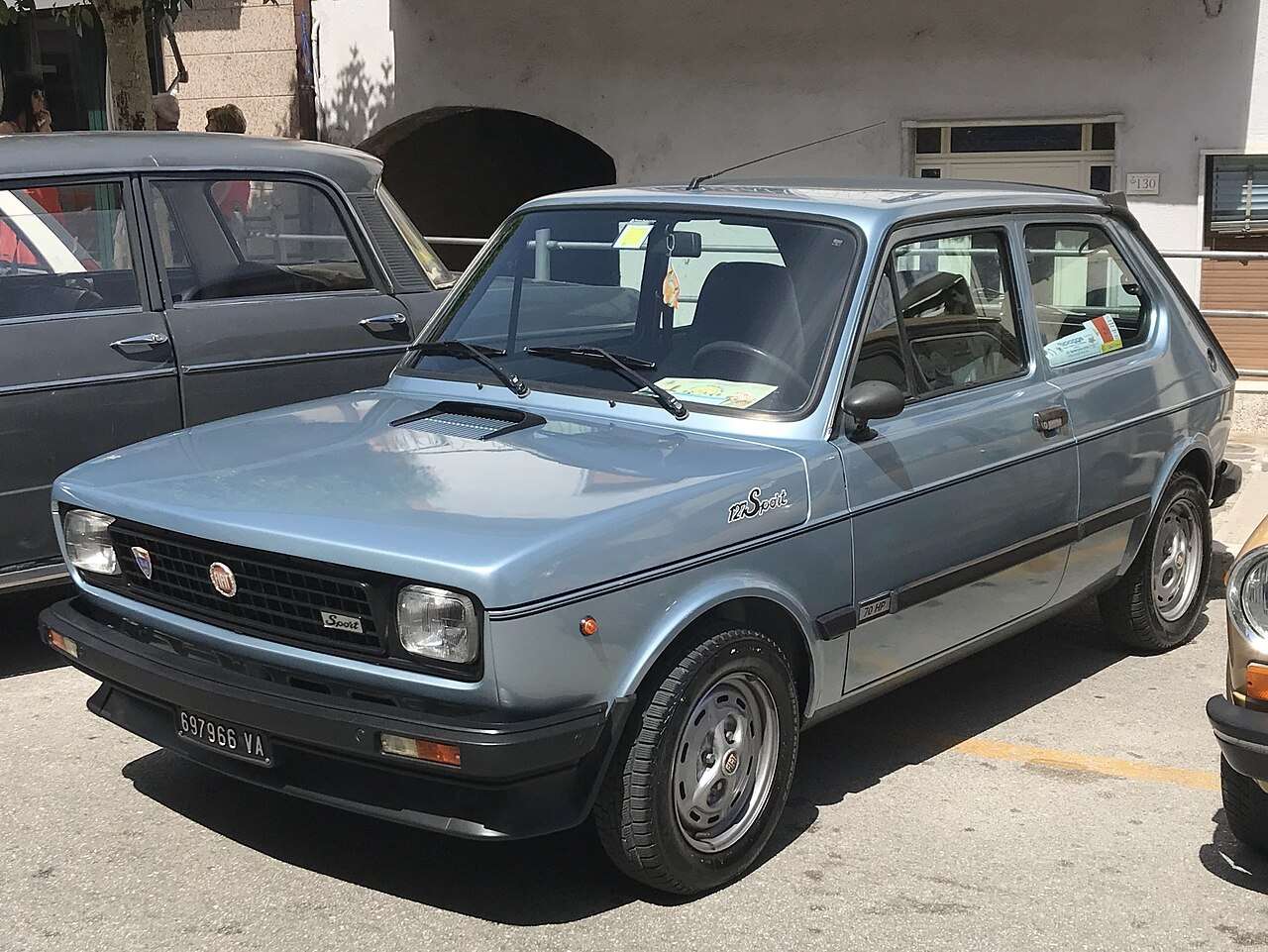
Fiat made a proper little hot hatch out of the 127. The Sport had a fizzing 1,049cc engine, its own visual cues and a later 1.3-litre chapter worth keeping separate.
1. The Sport arrived in 1978
Fiat introduced it after the second-series restyle of its small hatchback. The everyday 127 was already well established by then. The Sport added a car for drivers who wanted more response from a shape they already knew.
2. Its 70 came from a 1,049cc engine
Fiat’s heritage archive records 70 CV for the original Sport, and the FIA papers give the precise displacement as 1,049cc. Fiat commonly called it a 1050. The badge expressed what the company had got out of a very small engine.
3. The engine made peak power at 6,500rpm
A contemporary advertisement archived by the University of Malta places the original Sport’s maximum output high in the rev range. That is a good clue to the character Fiat was selling. It suited a little car that rewarded a driver for using its gears.
4. Fiat sold the Sport with more than a badge
Period advertising highlights sportier instrument presentation and front seats with head restraints. It also makes a point of the car’s interior and styling. The showroom proposition was an identifiable package, even before you read the engine figures.
Love cars you don’t see every day?
Get forgotten cars, surprising motoring stories and the most interesting finds from Unusual Cars by email.
Free to join. No spam. Unsubscribe whenever you like. See our Privacy Policy.
5. The split rear backrest was part of its appeal
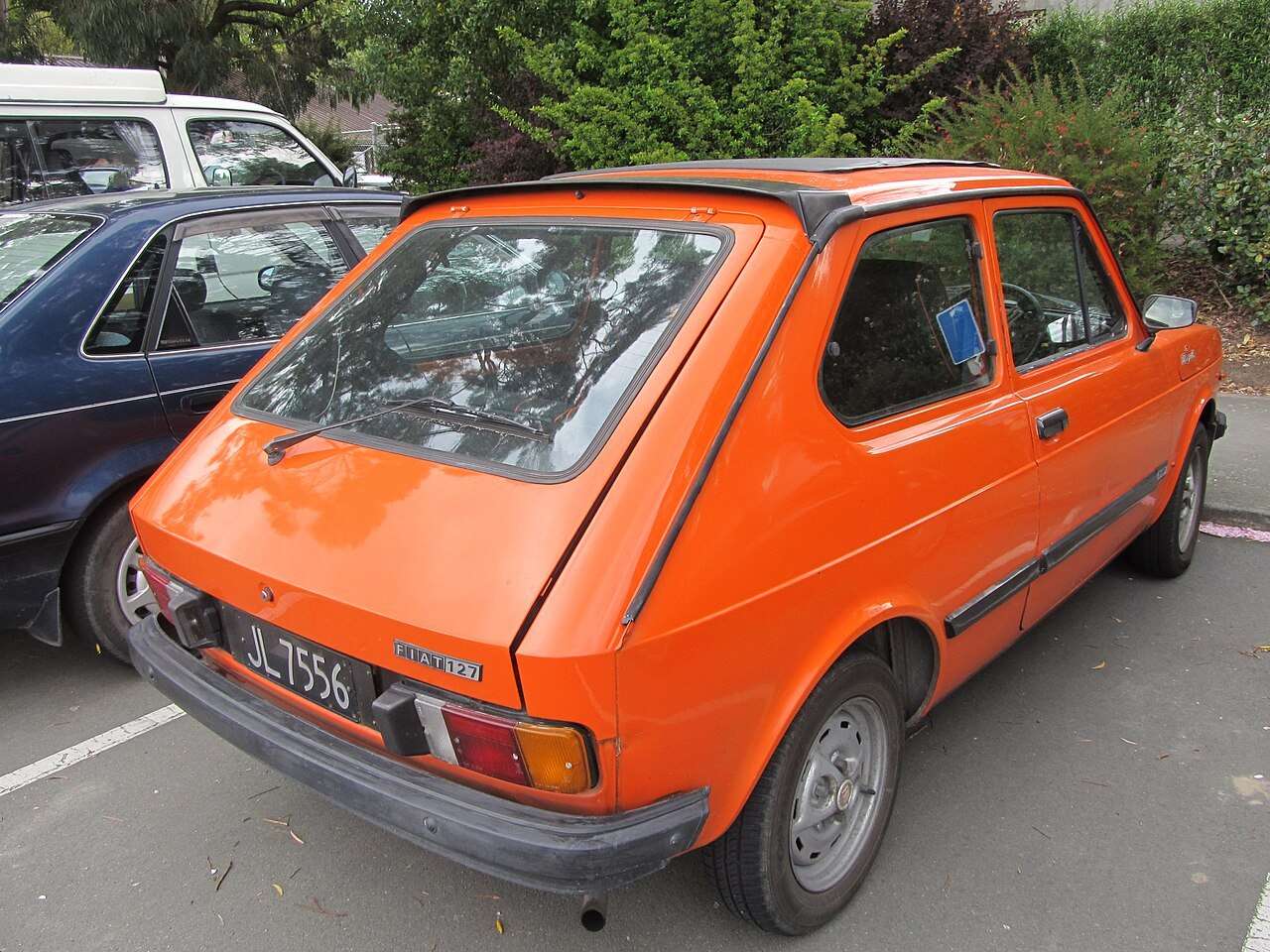
Fiat’s 1979 advertising calls out the folding rear seat arrangement. The Sport retained the hatchback’s ability to carry awkward luggage while making the front seats the place you wanted to be. That dual role was central to the early hot hatch idea.
6. The FIA gave the 70 HP Sport its own file
The FIA archive records the early car under homologation number 5715. The paperwork shows exactly which model and engine the entry refers to. It is a better place to start than assuming every rally liveried 127 is the same model.

7. The Sport grew to 1.3 litres
Fiat’s later third-series Sport gained a 1.3 rated at 75 CV. That makes the 70 and 75 two separate showroom specifications. Cars from both stages are called 127 Sport, so the extra detail in a caption is worthwhile.
8. A five-speed gearbox joined the later 127 range
Fiat records five-speed availability with the third series and the larger Sport motor. It is another reason to be careful when borrowing a specification for an earlier 1050. With a car this small, the number of ratios formed part of the driving experience.
9. The 127 predated the Sport by years
Fiat had launched the first 127 in 1971. The 70 HP car arrived well into the model’s life. By then the original idea of a practical front-wheel-drive small car had already proved there was a big audience for it.
10. The Uno was waiting in the wings
Fiat launched the Uno in 1983 and the 127 Sport belongs just before that handover. The old car’s competition records extend into that year. That puts this fiery version at the end of a long small-car chapter instead of at the beginning of Fiat’s hot hatch story.
Read about the Fiat Croma Turbo i.e..
Explore more 10 Things articles
Browse the Unusual Cars 10 Things hub.
Sources and further reading
- Fiat’s heritage history of the 127 and Sport
- FIA original 127 Sport 70 HP homologation archive
- 1980 period Fiat 127 Sport advertisement and engine figures
- March 1979 Fiat range advertisement in l’Unità
Featured image: A Fiat 127 Sport 70 HP. Photo by Corvettec6r via Wikimedia Commons (CC BY-SA 4.0, resized).
Join the Unusual Cars Club
Get more forgotten performance cars, surprising motoring stories and new 10 Things articles by email.
Free to join. No spam. Unsubscribe whenever you like. See our Privacy Policy.