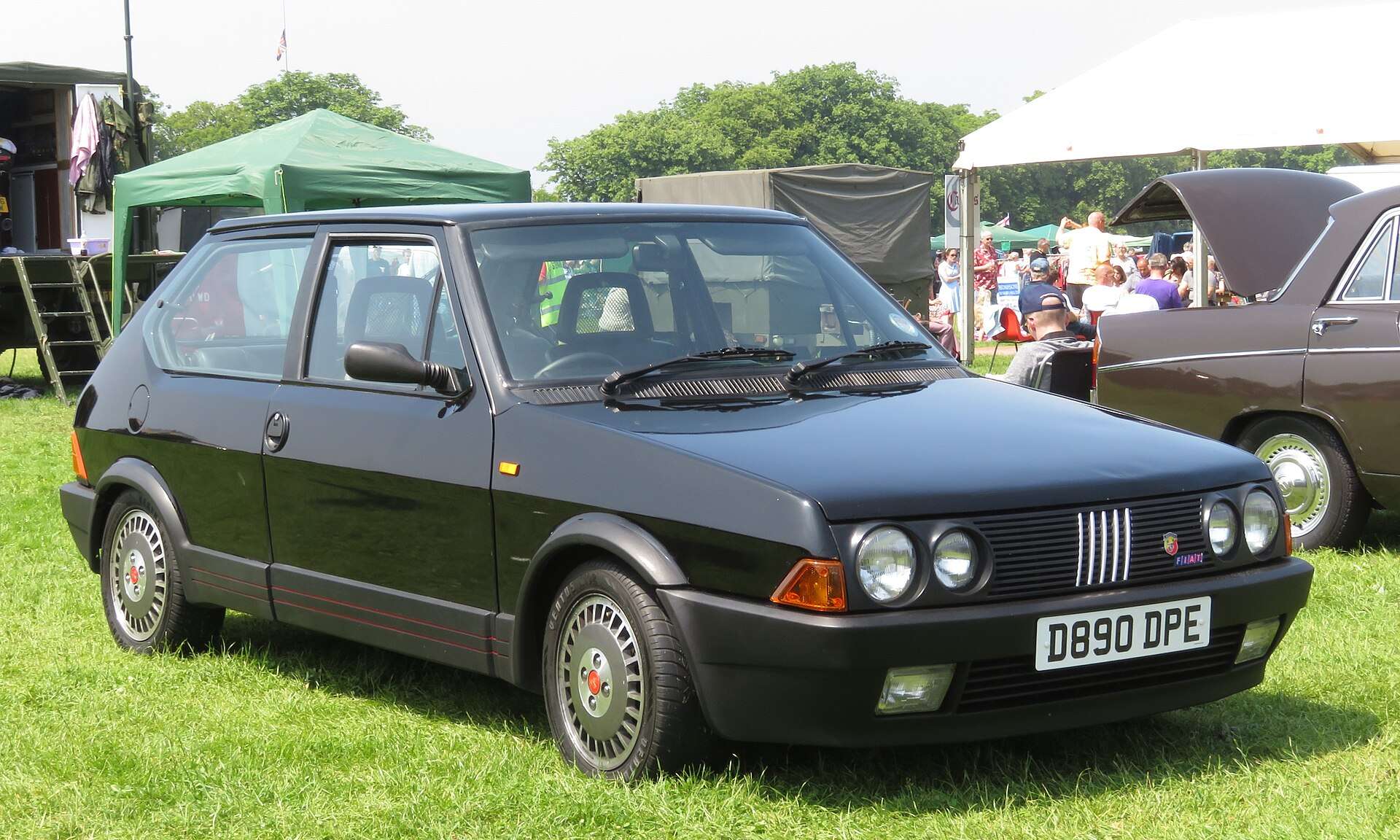
The Fiat Strada Abarth, sold across most of Europe as the Ritmo Abarth, was one of the great unruly hot hatches of the 1980s. The 125TC and 130TC paired a family-hatchback body with a big twin-cam engine, a close-ratio gearbox and a character far removed from the polished Golf GTI formula.
This guide explains the difference between the 125TC and 130TC, why the car matters and what to inspect before buying.
Strada in Britain, Ritmo elsewhere
Fiat used the name Strada in the UK and Ireland, while the same hatchback was sold as the Ritmo in continental Europe. Both names matter when researching cars, sourcing parts and searching adverts. A UK-registered Strada can share much of its mechanical story with an Italian-market Ritmo, but always confirm the precise year, engine and specification.
125TC versus 130TC
The 125TC introduced the performance Abarth formula: a 2.0-litre twin-cam four-cylinder engine, five-speed manual gearbox, firmer suspension and purposeful styling. The later 130TC developed the theme with 130 PS, twin carburettors and a sharper edge. Fiat’s 130TC was homologated for Group A in 1984 with a 1,995cc four-cylinder engine and front-wheel drive.
| Model | What it offers | What to check |
|---|---|---|
| 125TC | The earlier 2.0-litre Abarth hot hatch | Original engine specification, corrosion and missing trim |
| 130TC | 130 PS, twin-carburettor flagship with Group A history | Carburation, cooling, gearbox operation and structural rust |
How the 130TC moved the formula on
The 125TC established the layout: Fiat’s 2.0-litre double-overhead-cam engine in a compact front-wheel-drive hatch, with revised suspension and a five-speed manual gearbox. The later 130TC was not merely a badge change. It used 1,995cc, twin double-choke carburettors and a claimed 130 bhp at 5,900rpm, alongside a close-ratio five-speed ZF gearbox and revised brakes with ventilated front discs. Period dimensions and weight also help explain its character: it was a compact, light car rather than a modern high-powered hatch.
For motorsport context, the FIA historic database records the Ritmo Abarth 130 TC under Group A homologation dating from 2 January 1984. That does not make every road car a competition special, but it explains why correct specification matters. The road-going 130TC sits at the end of a genuine performance-development story rather than being a trim package added to an ordinary Strada.
A forgotten performance car with real character
The Abarth was never a discreet hatch. It is defined by its boxy, rounded body, purposeful stance and mechanical character. That makes it a natural fit in our Forgotten 1980s Performance Cars collection: historically significant, scarce enough to feel special and still an excellent entry point into the era’s more individual hot hatches.

What makes it special on the road?
The attraction is not simply peak power. The 130TC’s naturally aspirated twin-cam engine and period carburettors give it a direct, busy character that feels very different from a modern turbocharged hatchback. The close ratios and front-drive layout reward a driver who keeps the engine working. It is a car to enjoy for its response and texture, not to treat as a generic investment.
Buying guide: the checks that matter
1. Structure before cosmetics
Rust is the first conversation. Examine sills, floorpans, wheelarches, suspension mounting points, inner wings, the base of the screen and any repaired areas. A shiny repaint is not evidence of a sound shell: ask for photographs of restoration work and look underneath.
2. Engine, cooling and carburettors
Listen from cold, check for smoke, oil pressure concerns, coolant leaks and signs of overheating. On a 130TC, poor running may be adjustment-related but should never be dismissed without diagnosis. Look for sensible fuel-system work, an orderly engine bay and evidence that the cooling system has been maintained.
3. Gearbox, clutch and driveline
A period hot hatch should feel mechanical, but it should not crunch, jump from gear or resist selection once warm. Test every ratio, reverse and the clutch bite point. A tired gearbox can turn a promising cheap car into an expensive project.
4. Originality, identity and documentation
Confirm chassis and engine details against the V5C and build history. Modified examples can be enjoyable, but original trim, correct wheels, badges and carburettor specification will matter more as cars become rarer. Keep invoices, photographs and evidence of major restoration with the car.
5. Electrical equipment, trim and glass
Do not restrict the inspection to engine and body. Test the instruments, warning lights, heater fan, wipers and window mechanisms; minor electrical faults can be time-consuming when the cause is an old connector, damaged wiring or a missing switch. Check the dashboard, seats, door cards, external plastic trim and glass closely too. These are now specialist cars, and a complete but slightly tired original example can make more sense than one that needs several hard-to-find cosmetic items.
6. Sensible modifications and specialist evidence
Period hot hatches were often modified, so a non-standard exhaust, suspension or carburettor setting is not automatically a reason to walk away. It is a reason to ask better questions. Look for an orderly installation, invoices, photographs and a clear explanation of why the change was made. On the 130TC, a specialist set-up for the carburettors and ignition is more reassuring than a car that runs badly but is described as having “character”.
Before you travel to view one
Ask for a cold-start video, photographs of the sills, floorpans, inner wings, screen surrounds and boot floor, plus close shots of the engine bay, wheels, seats and dashboard. Request the V5C registration number, chassis number where appropriate, MOT history and a summary of major restoration work. This small amount of preparation can reveal whether you are considering a well-preserved Abarth or an incomplete restoration with a desirable badge.
Ownership reality
A good Strada/Ritmo Abarth should be bought on body condition, evidence of care and completeness—not merely on price. Mechanical work is generally easier to understand than reconstructing a rotten or incomplete shell, and specialist owner communities can be invaluable for finding parts and advice.
More forgotten 1980s performance cars
Explore the Nissan March Super Turbo, Mini ERA Turbo, Lancia Thema Turbo, Fiat Uno Turbo i.e. and MG Maestro Turbo.
Image credits
Competition-prepared Fiat Ritmo Abarth 130TC: Adriano, CC BY-SA 3.0, via Wikimedia Commons.