In this article
- What does RS stand for on an Audi?
- Audi S line, S and RS: which is which?
- RS2 Avant: the Porsche connection was real
- RS4: turbocharged V6, high-revving V8, then V6 again
- RS6: four generations, four versions of excess
- RS6 Avant GT: a special edition with more than graphics
- TT RS and RS3: the five-cylinder line returns
- RS5, RS7 and the move beyond estates
- Electric RS and the 2026 RS5 hybrid
- What quattro does—and does not—tell you
- How to identify a genuine Audi RS
- Audi RS questions answered
- The enduring appeal of RS
A fast estate is one of the most appealing contradictions in motoring: room for the family, luggage and an entirely unreasonable turn of speed. Audi made that contradiction central to the RS identity, but the history has since expanded far beyond the estate car.
It includes Porsche collaboration, Cosworth-developed engine work, five-cylinder compact cars, a V10 executive express, powerful SUVs and electric performance. The useful question is not simply which RS is fastest. It is how each generation changed the relationship between everyday usability and specialist engineering. [1] [2] [3] [4]
What does RS stand for on an Audi?
Audi RS stands for RennSport, meaning racing sport. It identifies the high-performance end of the range, rather than an exterior styling package. The business behind the modern cars began as quattro GmbH in 1983 and was renamed Audi Sport GmbH in 2016. [5] [6]
Two distinctions follow. The quattro company name was not the same thing as the quattro drivetrain badge, and the RS badge is not interchangeable with S line. A car can have quattro drive and S line trim without being an RS model. [6] [7]
Audi S line, S and RS: which is which?
| Badge or description | What it tells you |
|---|---|
| S line | A sporting trim or equipment specification on the underlying model; details vary by car and market |
| S model | A distinct performance derivative, such as an S3, rather than an ordinary A3 wearing S line equipment |
| RS model | A further, dedicated high-performance derivative, such as an RS3 |
| quattro | An all-wheel-drive designation; it does not by itself identify an S or RS model |
The distinction is reflected in Audi’s model naming and its retailers’ explanations of the range. It is especially useful when browsing adverts that prominently display “S line” while giving much less attention to the actual engine. [7] [5]
There is nothing wrong with choosing S line for its appearance or equipment. It simply answers a different question from choosing an RS for its powertrain and chassis specification.
RS2 Avant: the Porsche connection was real
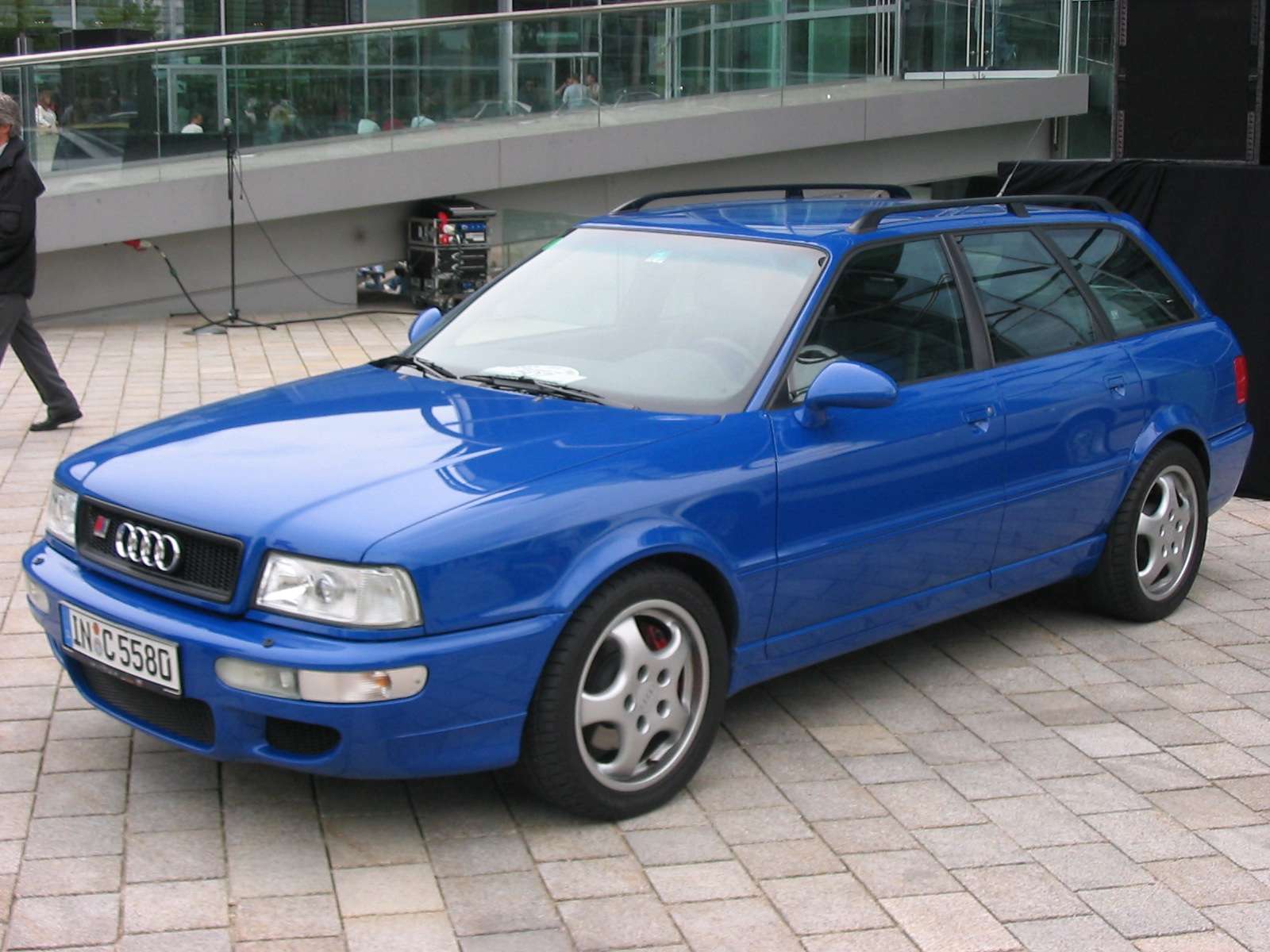
The RS2 Avant arrived in 1994, combining Audi’s estate-car format with development and production work involving Porsche. Its turbocharged 2.2-litre five-cylinder engine produced 315 PS, and the partnership extended to components including brakes and wheels. Audi’s heritage material records production across 1994 and 1995. [1] [2]
That relationship is more substantial than a marketing association, but it should not be simplified into “an Audi with a Porsche engine”. The identity came from the way the whole car was developed and assembled, not from replacing its Audi engine with an unrelated Porsche unit.
The RS2 established an enduring theme: conspicuous performance did not require abandoning practical bodywork. Its estate shape was part of the point. It allowed the car to be extraordinary in use without adopting the shape or accommodation compromises of a conventional sports car.
For modern readers, that is the historical importance of the RS2. It set out a convincing template for the cars that followed, rather than merely winning an acceleration comparison in its launch year.
RS4: turbocharged V6, high-revving V8, then V6 again
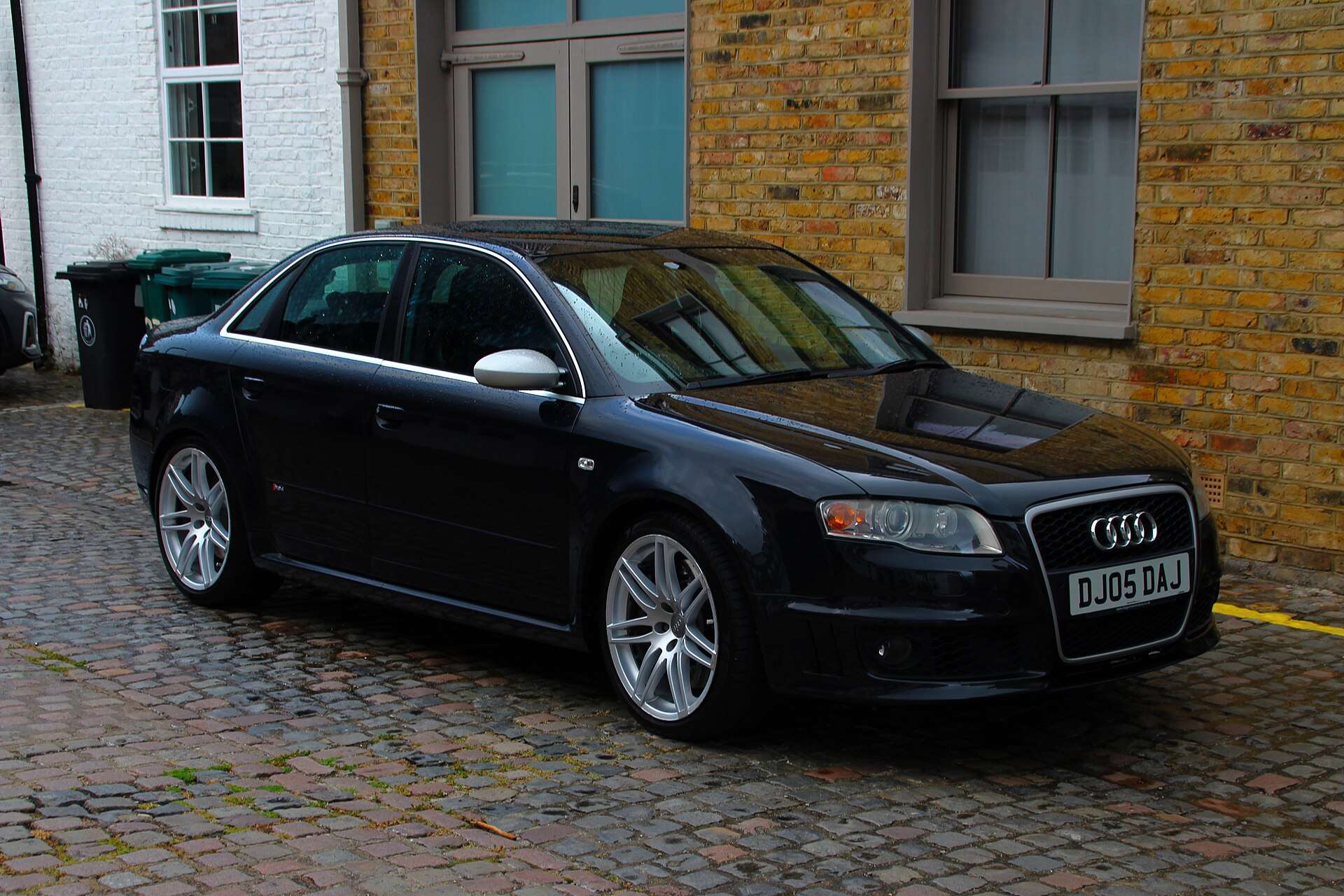
The first RS4, the B5-generation Avant, followed at the end of the 1990s. Cosworth Technology worked with quattro GmbH on its 2.7-litre twin-turbo V6, which produced 380 PS. The B7 generation subsequently adopted a naturally aspirated 4.2-litre V8 and expanded the choice of bodies beyond the estate. [2]
The later B8 RS4 returned to an Avant-only format while retaining V8 power; the B9 moved to a 2.9-litre twin-turbo V6. These changes are why an RS4 search needs a generation code as well as a model name. [8]
| RS4 generation | Core engine character | Important distinction |
|---|---|---|
| B5 | 2.7-litre twin-turbo V6 | The first RS4; an Avant |
| B7 | 4.2-litre naturally aspirated V8 | Saloon, Avant and Cabriolet versions |
| B8 | 4.2-litre naturally aspirated V8 | The estate becomes the sole format |
| B9 | 2.9-litre twin-turbo V6 | A return to turbocharged six-cylinder power |
Audi’s RS4 histories document the sequence. [2] [8]
The model did not improve by retaining one supposedly perfect engine indefinitely. It changed direction. That leaves a richer used-car choice: different generations offer different reasons to be interested, even before specification and condition enter the discussion.
RS6: four generations, four versions of excess
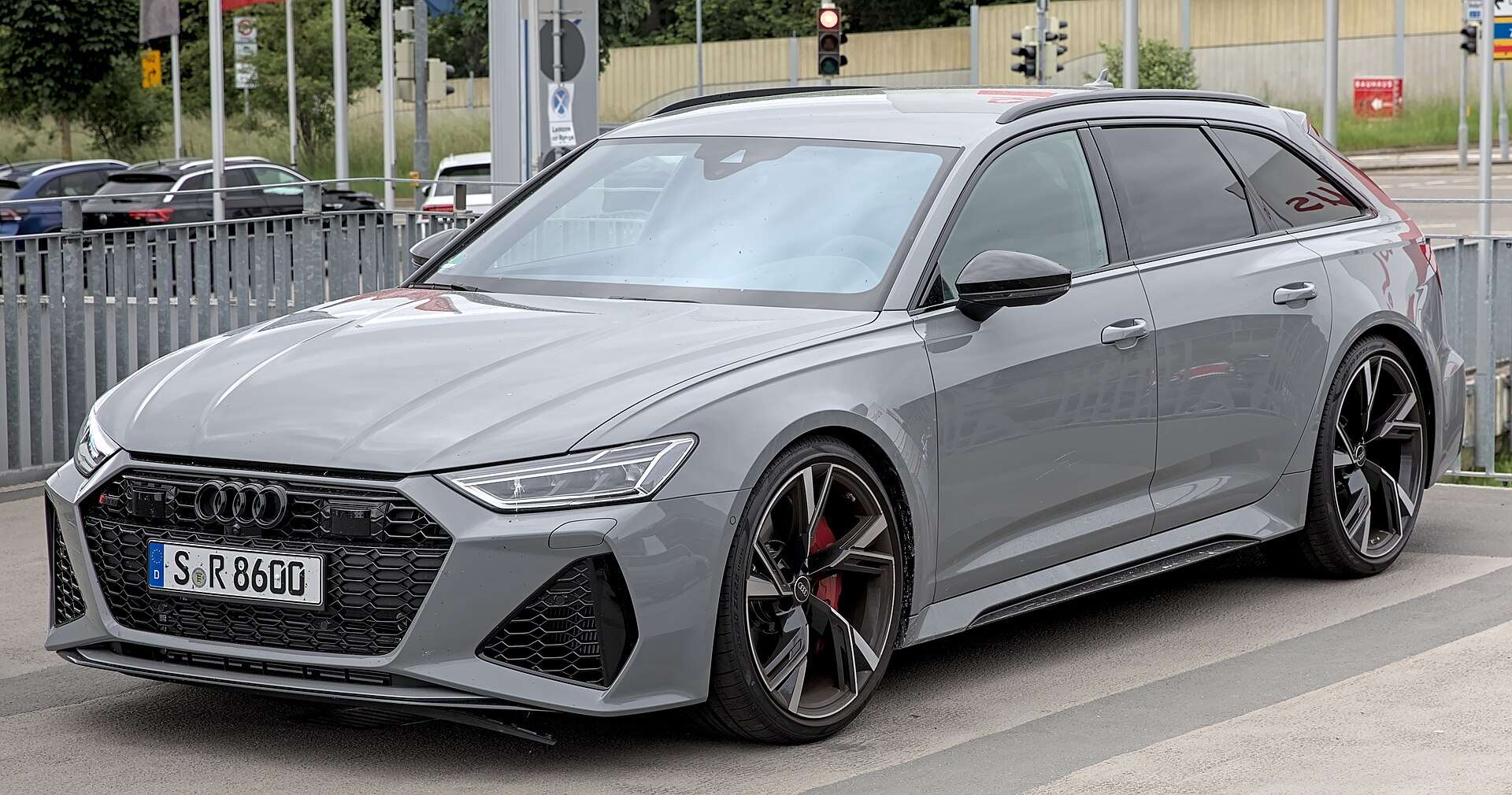
The RS6 arrived in 2002, moving the idea into a larger executive-car class. The C5 used a twin-turbo V8; the C6 adopted a twin-turbo V10. The C7 returned to a V8, and the C8 continued the turbocharged V8 estate formula. Audi’s twentieth-anniversary history describes these four distinct generations. [3]
The V10 deserves particular care. An RS6 V10 and a contemporary S6 V10 are not interchangeable descriptions. The RS6 installation was turbocharged and formed part of a different overall performance package. Similar cylinder counts do not establish identical engines or specifications. [3]
The early generations included saloons as well as estates, whereas the later RS6 road-car identity became strongly associated with the Avant. That makes the name useful but incomplete: an advert still needs the generation and bodystyle to explain what is actually being offered. [3]
There is a broader lesson here. The RS6’s appeal is not merely that it has more cylinders or more power than a smaller Audi. It applies specialist performance development to a body chosen for space and usability. Remove the practical side of the equation and much of its unusual charm disappears.
RS6 Avant GT: a special edition with more than graphics
The 2024 RS6 Avant GT was limited to 660 cars worldwide. Audi linked its visual treatment to the 90 quattro IMSA GTO racing car, but the programme went beyond heritage graphics: dedicated chassis work, weight-saving components and special finishing arrangements distinguished it from an ordinary RS6. [9]
The production process is part of the story. Audi described the cars being completed at Böllinger Höfe after the main body and paint stages. That gives the edition a specific manufacturing identity as well as a numerical limit. [9]
For readers comparing special editions, this is the right set of questions to ask. Is the difference only colour and trim? Is there an altered chassis or powertrain? Is the edition genuinely limited, and is the stated number global or specific to one country? The GT is more interesting when those questions are answered than when it is presented simply as “the rare one”.
TT RS and RS3: the five-cylinder line returns
The TT RS introduced Audi’s modern turbocharged 2.5-litre five-cylinder performance engine in 2009. The first RS3 Sportback followed in 2011, using the same broad engine concept in a practical hatchback. Audi’s historical material records 340 PS for those early versions and a later 360 PS TT RS plus. [10]
These cars brought a different character to the RS family from the larger V8 and V10 models. They also created a clear distinction within the compact range: an RS3 was not simply an S3 with a more aggressive bodykit.
The connection to Audi’s earlier five-cylinder identity is appealing, but it should not be exaggerated into a claim that the modern engine is the same unit as the RS2’s. Heritage can describe a configuration and character without meaning that the hardware remained unchanged for decades.
Love cars you don’t see every day?
Get forgotten cars, surprising motoring stories and the most interesting finds from Unusual Cars by email.
Free to join. No spam. Unsubscribe whenever you like. See our privacy policy.
RS5, RS7 and the move beyond estates
As the range expanded, RS ceased to mean an occasional specialist estate. The RS5 carried the idea into the coupé family, the RS7 into the large fastback format, and RS Q models into SUVs. Audi Sport’s anniversary material records that wider spread of products alongside the separately named R8 sports car. [4]
The R8 is a useful boundary case. It belongs in an Audi Sport company history, but it is not an RS model merely because it is fast and shares the same performance organisation. The same discipline applies to the original quattro: an important ancestor is not automatically an RS-badged production car.
Keeping those distinctions clear prevents a history from turning into a list of every powerful Audi ever sold.
Electric RS and the 2026 RS5 hybrid
The RS e-tron GT extended the RS designation into battery-electric performance. That means the letters no longer imply any particular combustion-engine arrangement—or necessarily a combustion engine at all. [11]
Another significant change arrived with the new RS5 unveiled in February 2026. Audi described it as its first high-performance plug-in hybrid, combining a 2.9-litre V6 with an electric motor for a system output of 639 PS. It was introduced in Sedan and Avant forms, changing the historical relationship between the RS4 and RS5 family names. [12]
These are engineering and naming developments, not reasons to rewrite older cars out of the story. An early V8 RS5 and the hybrid-era RS5 are different propositions. Their shared badge is the starting point of a comparison, not evidence that they deliver performance in the same way.
Nor should a launch announcement be mistaken for a permanent availability statement. Used-car identification should always be tied to the exact generation; new-car availability needs a current market-specific check.
What quattro does—and does not—tell you
The quattro name is central to Audi’s performance identity, but the precise drivetrain arrangement depends on the model and platform. The original RS2, a compact RS3, a larger RS6 and an electric RS e-tron GT do not become mechanically identical because all use all-wheel drive. [1] [10] [3] [11]
The useful approach is to identify the actual system and its generation. How is torque transferred between the axles? What hardware controls distribution at an axle? Is the car combustion-engined, hybrid or electric? Those questions reveal more than treating quattro as a single universal component.
All-wheel drive also does not remove the need to understand the tyres, brakes and condition of a particular car. A drivetrain label is not a substitute for a complete inspection.
How to identify a genuine Audi RS
Check the original model designation and factory build information before drawing conclusions from bumpers, badges, exhaust trims or wheels. S line styling can look purposeful, while later owners can fit parts inspired by an RS. Appearance alone cannot establish the car’s identity.
For a special edition, verify the equipment list against the original announcement and determine whether the production figure refers to the world, Europe or the UK. A dealer’s description of “rare specification” is not the same as a manufacturer-declared limited edition.
The same care applies to power figures. Establish whether a number refers to factory output, an aftermarket remap or a claimed combined hybrid-system output. They are not directly interchangeable descriptions of the same thing.
Audi RS questions answered
What was the first Audi RS road car?
The RS2 Avant, introduced in 1994, began the production RS line. It was developed with Porsche involvement. [1]
Is S line the same as RS?
No. S line is an equipment specification. RS identifies a dedicated high-performance model. [7] [5]
Are all Audi RS cars estates?
No. The history also includes saloons, coupés, a cabriolet, hatchbacks, fastbacks, SUVs and electric models. [2] [4] [11]
Is the RS2 a Porsche-engined Audi?
That description is misleading. It used an Audi five-cylinder engine within a car developed and produced with Porsche collaboration. The partnership was real, but it should be described accurately. [1]
The enduring appeal of RS
The best RS cars make practical bodywork feel like a deliberate choice rather than a compromise. The history becomes especially interesting where the badge conceals a major change of engine, layout or purpose. Understanding those changes is more rewarding than simply finding the largest power figure in a specification table.
Love cars you don’t see every day?
Get forgotten cars, surprising motoring stories and the most interesting finds from Unusual Cars by email.
Free to join. No spam. Unsubscribe whenever you like. See our privacy policy.
Sources and further reading
- Audi Tradition: the premium-class era and RS2Manufacturer archive.
- Audi: the history of the RS4Manufacturer model history.
- Audi: 20 years and four generations of the RS6Manufacturer model history.
- Audi: highlights from 40 years of Audi Sport GmbHManufacturer company history.
- Audi Canada: RS models explainedManufacturer explanation of the RS name.
- Audi Sport GmbH: 40th-anniversary insightsManufacturer company history.
- Perth Audi: S line, S and RS explainedAudi retailer explanation of the model hierarchy.
- Audi Australia: the performance elite (2019)Manufacturer magazine with chronological RS model specifications.
- Audi: the RS6 Avant GT (2024)Manufacturer technical and production announcement.
- Audi archive: five-cylinder RS modelsManufacturer archive caption and model history.
- Audi: e-tron GT market introduction (2021)Manufacturer launch information.
- Audi: the new hybrid RS5 (2026)Manufacturer announcement; reveal is not treated as a UK delivery date.